
Lawn
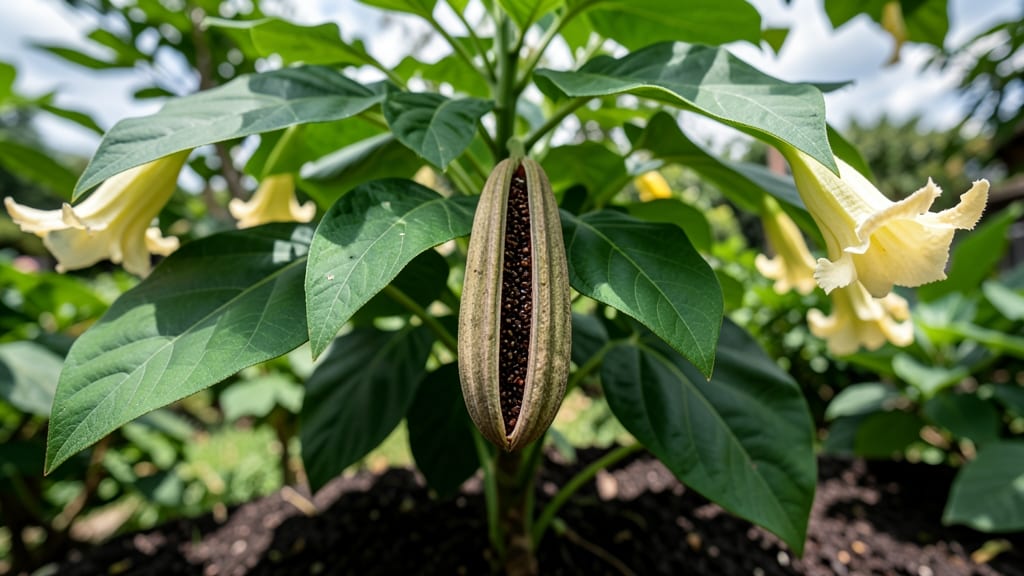
Harvesting devil's trumpet seed pods without twisting them is the secret to viable seeds every time. 🌱 These strange, bulbous pods crack open only when fully ripe—if you pry them too soon, you’ll end up with a pile of useless pulp.
The key is patience and knowing exactly when to harvest, because once they split, the seeds scatter like confetti in a breeze.
Start by watching for the pods to turn from green to a papery brown, then give them a gentle squeeze. If they’re firm but yield slightly, they’re ready. Wear gloves—every part of this plant is toxic—and collect them before they burst open naturally.
Inside, you’ll find glossy black seeds embedded in a sticky gel; this goo is normal and harmless, but it dries fast, so work quickly.
Once you’ve extracted the seeds, let them dry on a paper towel for a day or two before storing them in a cool, dark place. They’ll stay viable for months, waiting for their moment to sprout into those iconic, dangling trumpet-shaped blooms.
Just remember: these seeds need warmth and humidity to germinate—think of them as tropical snowflakes that refuse to melt until conditions are perfect.
Common mistakes include harvesting too early or letting the pods dry on the plant, which reduces seed quality. If you’re patient and precise, though, you’ll end up with a stash of seeds that could grow into your next batch of fragrant, moonlit blooms—just don’t forget the gloves.
The process is simple, but the magic happens in the waiting.
📚 In This Guide
- What you need
- Instructions
- Tips and common mistakes
- Wrapping up and next steps
What you need
- ● Mature devil’s trumpet plants – Ensure pods are fully ripe (dry, brown, and slightly papery to the touch).
- ● Pruning shears or sharp gardening scissors – 1 pair, with clean, sharp blades (sterilize with rubbing alcohol if reusing).
- ○ Gloves (optional but recommended) – 1 pair, heavy-duty gardening gloves to protect against thorns or rough pods.
- ● Large paper grocery bags or breathable seed-collection sacks – 2-3 bags, labeled with the harvest date.
- ● Small paintbrush or soft-bristle brush – 1 brush, for gently dislodging seeds from pods.
- ● Fine-mesh sieve or sifter – 1 sieve, with holes small enough to catch seeds but allow debris to fall through.
- ● Air-tight storage containers or glass jars – 2-4 containers, with tight-sealing lids for long-term seed storage.
- ● Permanent marker or labels – For marking containers with plant variety and harvest date.
- ○ Spray bottle with water (optional) – 1 bottle, for lightly misting pods if they’re overly dry.
- ● Dry, overcast day – Harvesting on a humidity-free day prevents mold and ensures seed viability.
- ● Well-ventilated workspace – A clean, dry area (like a garage or porch) to process pods without moisture buildup.
- ● Sunlight access (for drying) – A sunny windowsill or drying rack to cure seeds properly.
- ● Desiccant packets – Place in storage containers to absorb excess moisture.
- ● Digital scale – For tracking seed yield (fun for data-keeping gardeners!).
- ● Notebook & pen – To log seed viability tests or germination notes.
- ● Humidity pack or dehumidifier – For long-term seed storage in damp climates.
How to harvest devil's trumpet seed pods without damaging viability
Here's the foolproof method I use to collect healthy seeds—no stress, no wasted pods.
🌿 Step 1: Identify and Wait for Full Maturity
Devil's trumpet pods turn from green to deep brown when ready—this usually happens in late fall after the flowers fade. You'll notice the pods feel wooden and papery when gently squeezed. Harvesting too early means immature seeds that won't germinate, while waiting too long risks them splitting open naturally.
Check pods daily during the last two weeks of their season. The ideal moment is when they're fully dry but still intact. I mark the plants with a small flag when I first spot mature pods to avoid missing them.
✂️ Step 2: Cut Pods with Clean Tools
Use sharp pruning shears (not your fingers!) to snip the entire pod cleanly from the stem. Cut about ½ inch below the pod to avoid damaging the main plant. This prevents disease from entering through jagged cuts and ensures the plant stays healthy for future seasons.
Place pods in a paper bag (not plastic) immediately after cutting. The breathable fabric prevents moisture buildup, which can cause mold. I label each bag with the harvest date—this helps track freshness if germination takes months.
🪴 Step 3: Dry and Store Pods Properly
Spread pods in a single layer on a dry, well-ventilated surface like a mesh screen or cardboard box. Keep them in a cool, dark place (around 60-65°F) for 2-3 weeks. You'll know they're fully dry when the outer shell feels light and brittle—it should crumble slightly when squeezed.
Once dry, store pods in an airtight container with a silica gel packet to absorb any lingering moisture. I use small glass jars with tight lids, keeping them in a dark pantry. Properly stored, these seeds stay viable for 2-3 years—though I always test a few each year to confirm.
🌱 Step 4: Extract and Test Seeds
When ready to plant, gently crack open each pod with your fingers or a small hammer. The seeds inside should be plump and dark brown, not shriveled or dusty. Remove any debris or empty seed casings before storing the clean seeds in a labeled envelope.
For best results, stratify seeds by mixing them with slightly damp sand or peat moss, then refrigerating for 4-6 weeks. This mimics winter conditions and breaks dormancy. After stratification, sow seeds ¼ inch deep in well-draining soil and keep them in bright, indirect light until germination (which can take 4-8 weeks).
Tips & tricks for perfect devil's trumpet seed harvesting
Here's what I learned after years of trial and error to ensure every pod yields viable seeds.
Timing is Everything: The two-week window in late fall is your only shot—don't rush it! I check pods every morning during this period, giving each one a gentle squeeze. If it feels like a dry, hollow drum, it's ready. If it's still slightly flexible, wait another day. The difference between perfect seeds and wasted pods often comes down to this single, seemingly insignificant step.
Tool Selection: Sharp pruning shears are non-negotiable—dull blades crush pods and damage seeds. I keep a dedicated pair just for harvesting, and always clean them with rubbing alcohol between uses. For the half-inch cut below the pod, use a ruler to mark your shears if you're new to this. Precision here prevents disease from entering the plant's vascular system.
Drying Strategy: That 2-3 week drying period at 60-65°F might seem long, but it's crucial. I use a mesh screen over my garage floor (covered to keep out debris) and rotate pods every few days for even drying. The brittle test is foolproof—if it crumbles slightly when squeezed, it's ready. Skipping this step risks mold or seeds that won't germinate, and trust me on this.
Pro Tips for Devil'S Trumpet Seed Pod
- Here's what I learned after years of trial and error to ensure every pod yields viable seeds.
- Timing is Everything: The two-week window in late fall is your only shot—don't rush it!
- Tool Selection: Sharp pruning shears are non-negotiable—dull blades crush pods and damage seeds.
Frequently asked questions
about devil's trumpet seed pods—because every gardener deserves a little clarity!How do I know when devil's trumpet seed pods are ready for harvesting?
Harvest devil's trumpet seed pods when they turn dry and papery (usually late summer to early fall). Gently tap them—if seeds rattle inside, they’re ready! Avoid harvesting too early (green pods = immature seeds) or too late (pods may split open and scatter seeds).
How long does it take for devil's trumpet seed pods to mature?
From flowering to seed pod maturity, expect 6–10 weeks, depending on climate. Warm, sunny conditions speed up the process, while cooler weather may extend it. Monitor pods weekly for color changes (from green to tan/brown).
Can I harvest devil's trumpet seeds indoors?
Yes! If your climate is too cold, grow devil’s trumpet in containers and move them indoors near a sunny window or under grow lights. Just ensure they get at least 6 hours of light daily to prevent weak, non-viable seeds. A humidity tray helps too!
What if my seed pods crack open before I can harvest?
No stress—just scoop up the scattered seeds! Spread them on a paper towel to dry for 1–2 days, then store in a cool, dry place. If pods split early, it might signal overcrowding or drought stress. Next time, thin plants or water consistently.
Are there alternatives to devil's trumpet for zero-twist harvesting?
Try datura (Jimsonweed), angel’s trumpet, or tobacco—all produce seed pods that release seeds easily. For safer options, consider marigold or black-eyed Susan seeds, which also dry well. Just research toxicity if gardening with kids/pets!
Wrapping up and next steps
The devil’s trumpet seed pod may seem tricky to harvest, but with the right techniques—like zero-twist harvesting—you can ensure viable seeds every time. 🌱 Whether you’re a gardener aiming for lush blooms or a seed saver preserving rare varieties, patience and precision pay off.
Now that you’re equipped with the tools, timing, and tips, why not try it this season?
Ready to level up your seed-saving game? Start small—harvest a few pods, experiment with drying methods, and soon you’ll be a pro! 💡 Next, explore how to store your seeds for long-term viability.