
Container Gardens
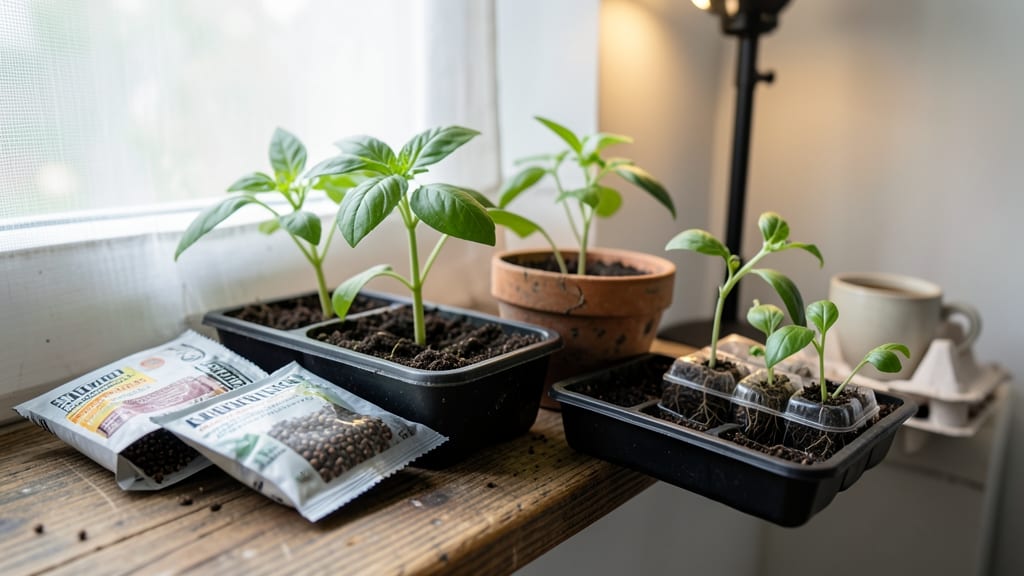
Growing basil from seed in containers lets you enjoy fresh herbs anywhere—even a tiny apartment balcony. 🌱 I’ve grown basil this way for years, and the secret isn’t fancy equipment but matching the plant’s needs to your space.
Start with the right seeds, a sunny spot, and a few simple supplies, and you’ll have fragrant leaves in just a few weeks.
You’ll need small pots with drainage holes (at least 6 inches deep), well-draining potting mix, and a sunny windowsill or balcony. Basil thrives in warmth and light, so a south-facing spot or grow light works best.
Plant seeds just below the soil surface, keep them moist, and expect sprouts in 7–14 days. Overcrowding is the biggest mistake—thin seedlings to 6–8 inches apart for strong growth.
By the time you’re pinching off the first leaves, you’ll notice the plants filling out with glossy, dark-green foliage. The smell alone makes it worth it, but the real payoff is fresh basil for cooking all season.
With the right care, your container basil will stay productive for months, even in small spaces.
This method works for patios, kitchens, or even office windowsills. The key is consistency—water when the top inch of soil feels dry and rotate pots for even growth. No green thumb needed, just attention to detail. Ready to grow?
📚 In This Guide
- What you need
- Instructions
- Tips and common mistakes
- Wrapping up and next steps
What you need
- ● Basil seeds: 1 packet (about 50-100 seeds, non-GMO preferred for best flavor).
- ● Containers: 2-3 small pots (4-6 inches deep) for seedlings, or
- ● 1 larger container (8+ inches deep) for direct sowing, with drainage holes.
- ● Potting mix: 2-3 cups of high-quality, seed-starting or well-draining potting soil (avoid garden soil—it’s too dense!).
- ● Drainage tray or saucer: 1 (to catch excess water and prevent root rot).
- ● Spray bottle: 1 (for gentle watering during germination).
- ● Grow lights or sunny windowsill: Access to 6+ hours of indirect light daily (or a small LED grow light for 12-16 hours if indoors).
- ● Seedling heat mat: 1 (speeds up germination if temps dip below 65°F).
- ● Fertilizer: Balanced liquid fertilizer (5-5-5 or organic options like fish emulsion) for transplanting.
- ● Plant labels: 2-3 (to track varieties if growing multiple types).
- ● Pruning shears: Small pair (for harvesting and shaping plants later).
- ● Mulch or pebbles: For decorative containers to retain moisture.
Step-by-Step instructions for growing basil from seed in containers
Here's how to grow fragrant, productive basil plants from seed—perfect for windowsills, patios, or balconies.
🌱 Step 1: Prepare Containers and Seed Starting Mix
Use 4-inch diameter containers with drainage holes—one per plant since basil roots grow shallow but wide. Fill each container with 1 cup of seed starting mix (not garden soil—it's too dense). Moisten the mix until it feels like a damp sponge, but not dripping. Tap the container gently to settle the soil without compacting it.
Basil seeds are tiny, so I like to sprinkle them on a scrap of paper first, then transfer 2-3 seeds per container to avoid overcrowding. Press them lightly into the top ¼ inch of soil—just enough to cover them. This depth ensures they won’t dry out while still getting enough light to germinate.
💧 Step 2: Create Ideal Germination Conditions
Cover the containers with clear plastic wrap or a humidity dome to trap warmth and moisture. Basil seeds need 70-75°F soil temperatures to sprout, so place them in a warm spot—like on top of the fridge or near a sunny window. Keep the soil consistently moist but never soggy; mist lightly with water if the surface dries out.
You’ll see sprouts in 7-14 days, but don’t rush to remove the cover until 50% of seeds have germinated. Once seedlings emerge, uncover them immediately to prevent mold. Thin to the strongest seedling per container by snipping the weaker ones at soil level—this avoids disturbing roots.
☀️ Step 3: Provide Bright, Indirect Light
Basil seedlings need 6-8 hours of bright, indirect light daily to grow sturdy. Place them near a south-facing window or under a grow light (LED bulbs work best). If leaves start stretching toward the light or look pale, your seedlings need more intensity—move them closer to the light source or increase exposure time.
Rotate containers a quarter turn every few days so plants grow evenly instead of leaning. Watch for first true leaves (the second set after the initial seed leaves)—this signals it’s time to fertilize lightly with a balanced liquid fertilizer diluted to half strength.
🪴 Step 4: Maintain Moisture and Prune for Bushiness
Water basil when the top inch of soil feels dry, using room-temperature water to avoid shocking roots. Containers dry out faster than garden beds, so check daily in hot weather. Avoid wetting leaves to prevent fungal diseases—water at the base instead.
Pinch off the top set of leaves when the plant reaches 6 inches tall to encourage branching. This creates a bushier plant with more harvestable stems. Regular pruning also prevents leggy growth and keeps basil compact—ideal for small spaces. Harvest leaves in the morning for peak flavor and to promote new growth.
✂️ Step 5: Harvest and Extend the Season
Harvest leaves when they’re 3-4 inches long by cutting just above a leaf node (where new growth emerges). This encourages the plant to branch out further. Basil grows quickly, so you can expect 2-3 harvests per season from a single plant if cared for properly.
To extend the season, move containers indoors before the first frost. Place them near a sunny window or under grow lights for 12-14 hours of light daily. Reduce watering slightly in winter since growth slows, but keep soil lightly moist. With the right care, your basil can keep producing until spring!
Tips & tricks for growing basil from seed in containers
Took me a while to figure these out, so here goes—these small tweaks make all the difference with basil.
Soil Temperature Secret: That 70-75°F soil temperature range in Step 2 is non-negotiable for germination. I learned this the hard way after waiting two weeks with no sprouts—turns out my kitchen was only 65°F! Place containers on top of the fridge or use a seedling heat mat if your space runs cool. A simple thermometer probe in the soil confirms you're hitting the sweet spot.
Light Intensity Hack: In Step 3, when you're providing those 6-8 hours of light, watch for "light stretching" (leaves reaching toward the source). This means your seedlings need more intensity. Move them within 6 inches of a south-facing window or switch to a 12-inch LED grow light. I've seen seedlings go from pale to vibrant green in just 24 hours after adjusting light placement.
Pruning Precision: The 6-inch height mark in Step 4 is your cue to pinch those top leaves—but here's the thing: use clean scissors or your fingers to remove the entire top set of leaves, not just a few. This encourages the plant to branch out from multiple nodes, giving you a bushier plant with more harvests. I've gotten up to 5 harvests per season using this method!
Winter Survival Strategy: For extending the season in Step 5, I've found that adding a small space heater near the windowsill (when using grow lights) helps maintain that 70-75°F range indoors. Just keep it on low—you don't need to replicate summer temps, just prevent the chill that slows growth. A small fan on low setting also helps prevent fungal issues from stagnant air.
Pro Tips for Growing Basil From Seed In Containers
- Took me a while to figure these out, so here goes—these small tweaks make all the difference with basil.
- Soil Temperature Secret: That 70-75°F soil temperature range in Step 2 is non-negotiable for germination.
- Light Intensity Hack: In Step 3, when you're providing those 6-8 hours of light, watch for "light stretching" (leaves reaching toward the source).
Frequently asked questions
Got questions about growing basil from seed in containers?
You’re not alone! Here are answers to the most common queries to help you cultivate thriving basil—even in small spaces.
How long does it take for basil seeds to germinate?
Basil seeds typically sprout within 7–14 days when kept warm (around 70°F/21°C) and moist. For faster results, soak seeds in warm water for 24 hours before planting. Patience is key—don’t disturb the soil while waiting!
When is the best time to plant basil seeds in containers?
Start seeds indoors 6–8 weeks before your last frost date (or directly outdoors after soil warms to 50°F/10°C). Basil thrives in warmth, so avoid planting too early—cold soil can delay germination or stunt growth.
Can I grow basil in any container, or are there restrictions?
Basil adapts well to most containers, but ensure they have drainage holes to prevent root rot. Minimum size: 6–8 inches deep (bigger is better for multiple plants). Use lightweight pots for easy moving if needed!
Why are my basil seedlings wilting or turning yellow?
Wilting often signals overwatering or poor drainage, while yellow leaves may mean underwatering or nutrient deficiency. Check soil moisture (keep it damp but not soggy) and ensure pots aren’t too crowded. A balanced fertilizer can help if growth stalls.
How do I keep basil from flowering too soon?
Basil flowers signal the end of its harvest life. To delay flowering, pinch off buds when they appear and ensure your plant gets 6+ hours of sunlight daily. Prune regularly to encourage bushier growth and more leaves!
Wrapping up and next steps
Growing basil from seed in containers is a rewarding journey that proves you don’t need a sprawling garden for a thriving harvest! 🌱 With the right setup—whether a sunny windowsill, balcony, or patio—you’ll enjoy fresh, fragrant leaves in no time.
Start small, stay consistent with care, and soon you’ll be savoring homegrown basil in your favorite dishes.
Ready to take the next step? Experiment with companion plants like tomatoes or peppers to maximize your container garden’s potential. Or, if you’re feeling adventurous, try growing other herbs like cilantro or parsley in similar setups. Happy gardening—your kitchen (and taste buds) will thank you!