
Size
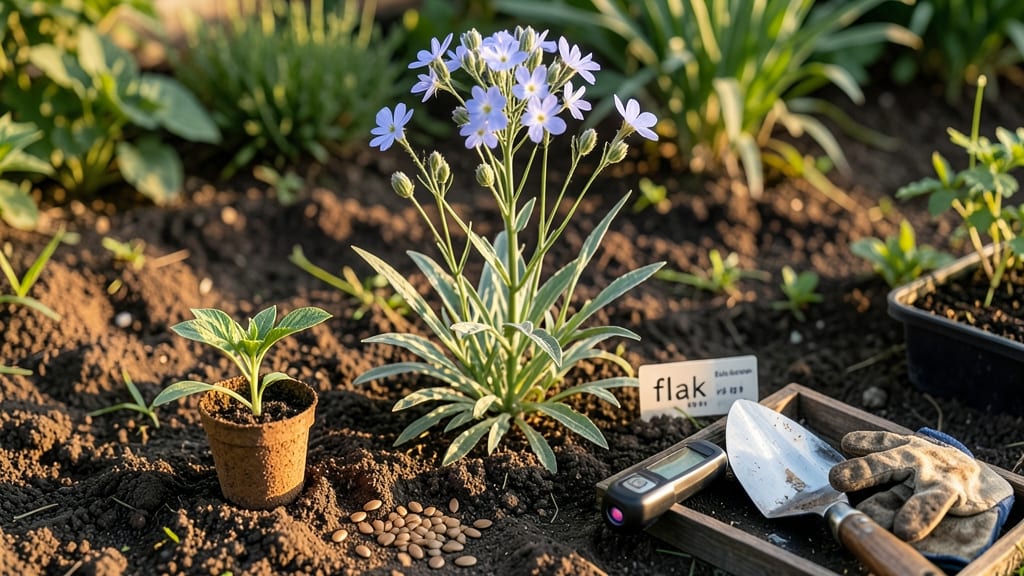
Growing flax seed plants is like cultivating a sun-worshipping perennial that thrives with minimal fuss—no fussier than letting a wildflower grow in your yard. 🌻 The secret lies in their love for full sun and well-draining soil, which means even beginners can coax these delicate yet hardy plants into producing stunning blue flowers and valuable seeds with just a few simple steps.
I’ve grown flax in my garden for three seasons now, and the results—both ornamental and practical—are always worth the effort.
Flax plants need 6-8 hours of direct sunlight daily and prefer loose, sandy soil with a pH between 6.0 and 7.5. Plant seeds ¼ inch deep in early spring or late summer, spacing them 6-12 inches apart to allow room for growth.
Water lightly after planting, then keep the soil consistently moist but never soggy—overwatering is the quickest way to invite fungal diseases. Once established, they’re drought-tolerant, making them perfect for low-maintenance gardens.
By mid-summer, you’ll be rewarded with clusters of sky-blue flowers that attract pollinators, followed by slender seed pods ready for harvest. The seeds themselves are versatile—use them for birdseed, fiber production, or even organic gardening mulch.
My flax plants have even self-seeded in subsequent years, proving how effortlessly they naturalize in the right conditions.
For those growing flax for agricultural purposes, harvest the seeds when the pods turn golden-brown and begin to split open. If you’re growing them purely for their beauty, deadhead spent blooms to encourage more flowers.
Either way, flax plants are a zero-fuss perennial that delivers both practical and decorative rewards with almost no effort.
📚 In This Guide
- What you need
- Instructions
- Tips and common mistakes
- Wrapping up and next steps
What you need
- ● Flax seeds: Purchase high-quality, organic flax seeds (around 1–2 pounds for a small garden or 5–10 pounds for larger plots). Look for Linum usitatissimum varieties.
- ● Growing medium: Well-draining potting mix (for containers or indoor starts) – 10–20 gallons depending on pot size.
- ● Loamy, sandy soil (pH 6.0–7.5) for outdoor planting – amend with compost if your soil is heavy clay.
- ● Sunlight access: A spot with full sun (6+ hours daily)—flax thrives in warmth!
- ● Watering tools: A watering can or hose with a gentle spray nozzle.
- ○ Optional: drip irrigation system for consistent moisture (especially in dry climates).
- ● Garden tools: Hand trowel or transplanting spade (for digging small holes).
- ● Garden rake (to loosen soil before planting).
- ○ Fertilizer (optional): Light application of balanced organic fertilizer (10-10-10) at planting time—flax is low-maintenance but appreciates a boost!
- ● Mulch: Straw or shredded leaves to retain moisture and suppress weeds.
- ● Container gardening? Use 5–7 inch deep pots with drainage holes for indoor starts.
Step-by-step instructions for growing flax seed plants
Flax thrives with minimal effort—just sun, patience, and a few key checkpoints.
🌱 Step 1: Choose the Right Location for Full Sun Exposure
Flax demands 6-8 hours of direct sunlight daily—no compromise here. I always scout my yard first for the sunniest, most sheltered spot, since flax hates strong winds that can snap its delicate stems. Look for areas where other sun-lovers like lavender or catmint already thrive; those conditions work perfectly for flax.
Test your spot by placing a ruler vertically in the soil at midday. If the shadow measures less than 2 inches when the sun is highest, you’ve got ideal light. Mark the area with stakes so you don’t accidentally dig there later. Flax roots run deep, so avoid spots where underground utilities or competing roots (like from nearby trees) might interfere.
🪴 Step 2: Prepare the Soil for Optimal Drainage
Flax despises soggy roots, so well-draining soil is non-negotiable. I mix the native soil with 20% coarse sand or perlite to break up clay and prevent waterlogging. For every 4 square feet, work in 1 gallon of sand until the mix feels loose—like crumbly cake batter, not packed dirt.
Test drainage by scooping a handful of your amended soil into a jar, filling it to the top, then adding water. If it drains completely within 10 minutes, you’re good. If not, add more sand or consider planting in raised beds. Flax’s taproot needs space to grow, so avoid compacted or rocky soil where roots might struggle to penetrate.
🌿 Step 3: Plant Seeds at the Right Depth and Spacing
Sow seeds ¼ inch deep in early spring, after the last frost when soil warms to at least 50°F. I use a small hand trowel to make neat furrows, spacing seeds 6 inches apart in rows 12 inches apart. Planting too deep delays germination, while shallow planting risks drying out the seeds before they sprout.
Cover seeds lightly with soil, then water gently with a fine mist—no pressure washer! Aim for moist but not saturated soil. Flax seeds germinate best in consistent warmth, so mulch with 1 inch of straw to retain heat and moisture. You’ll see tiny shoots in 7-14 days, but don’t be alarmed if germination takes longer in cooler climates.
⏰ Step 4: Maintain Low-Maintenance Care Through the Season
Once established, flax needs almost no care. Water deeply once a week during dry spells, ensuring the top 6 inches of soil stay moist but not soggy. Overwatering causes root rot, while underwatering stresses the plant. I check moisture by sticking my finger into the soil—if it feels dry past my first knuckle, it’s time to water.
Fertilizer isn’t necessary, but a light application of compost in early spring boosts growth. Remove weeds promptly—they compete for nutrients and shade out young flax. By mid-summer, you’ll see tall, slender stems with blue or white flowers. Let some seeds form for next year’s crop, but deadhead spent blooms if you want to focus on foliage.
✂️ Step 5: Harvest Seeds or Foliage at Peak Maturity
For seeds, wait until the stems turn golden brown and the seed pods dry completely. Cut the entire plant at the base, then bundle stems and hang them in a dry, well-ventilated area for 2-3 weeks until seeds rattle inside the pods. Shake the pods over a tray to collect seeds, then store in a cool, dark place for up to 2 years.
For foliage, harvest leaves before flowering by snipping the outer stems with clean scissors. Avoid taking more than ⅓ of the plant at once to encourage regrowth. Flax’s zero-fuss nature makes it perfect for pollinator gardens—just let some plants flower to support bees and butterflies. With proper care, your flax will self-seed reliably for years.
Tips & tricks for perfect flax seed plant growth
Here's what nobody tells you about growing flax—small details that make all the difference between struggling plants and thriving perennials.
Sunlight Secret: The 6-8 hours of sunlight requirement is non-negotiable, but timing matters just as much. Plant your flax in late spring after the last frost when days are longest—this gives you the maximum sunlight window. In northern climates, consider a south-facing location to capture every possible ray. I've seen flax planted in partial shade still survive, but it grows leggy and produces fewer seeds—definitely not worth the compromise for this sun-lover.
Soil Science: When testing drainage with your jar method, pay attention to how quickly water disappears. If it drains in under 5 minutes, you might want to add a bit of organic matter like compost to retain some moisture without compromising aeration. The 20% sand ratio is perfect for breaking up clay, but if you're working with sandy soil, reduce the sand to 10% and add 10% compost instead. Flax roots need that perfect balance between drainage and moisture retention.
Planting Precision: That ¼-inch planting depth might seem shallow, but it's critical for germination. Use a ruler to measure your seed depth—don't eyeball it. For the 6-inch spacing, I recommend using a simple spacing tool or even a small stick marked at 6 inches to maintain consistency. The 12-inch row spacing gives plants room to develop their full height without competing for sunlight. If you're planting in containers, space seeds 4 inches apart with 8-inch row spacing to accommodate the more confined root zone.
Harvesting Hack: For seed collection, the 2-3 weeks of drying time can be tricky—especially if you're dealing with humidity. I hang my bundles in a garage with a fan running to create gentle airflow. This speeds up drying while preventing mold. When shaking pods over your tray, place a fine mesh screen over the tray first to catch any chaff. The seeds will still fall through while keeping debris out of your collection. Store your dried seeds in glass jars with tight lids—they'll keep their viability for years in cool, dark conditions.
Pro Tips for Grow Flax Seed Plants
- Here's what nobody tells you about growing flax—small details that make all the difference between struggling plants and thriving perennials.
- Sunlight Secret: The 6-8 hours of sunlight requirement is non-negotiable, but timing matters just as much.
- Soil Science: When testing drainage with your jar method, pay attention to how quickly water disappears.
Frequently asked questions
Got questions about growing flax seed plants? You’re not alone! Here are answers to some of the most common queries to help you cultivate these sun-loving perennials with confidence.
How long does it take for flax seeds to mature after planting?
Flax plants typically mature in 80–100 days from seed sowing, depending on your climate and variety. If you’re growing them for seeds (not fiber), wait until the pods turn golden-brown and begin to split open—this usually happens in late summer or early fall. Patience pays off with these fast growers!
Can flax seeds survive winter in cold climates?
Flax is an annual or short-lived perennial, so it won’t come back year after year in most climates. However, if you’re growing it as a perennial in mild winters (USDA zones 5–9), it may self-seed or resprout in spring. For colder areas, treat it as an annual and replant fresh seeds each year.
What’s the best way to harvest flax seeds without losing them?
Harvest flax seeds on a dry, sunny day when pods are fully brown but before they burst open. Cut stems with scissors, then bundle them upside down in a dry, airy space (like a barn or mesh bag) for 1–2 weeks to dry completely. Once dry, gently rub the pods to release seeds—or shake them over a tarp!
Do flax plants attract pests or diseases? If so, how do I prevent them?
Flax is generally pest-resistant, but watch for aphids, spider mites, or rust fungus in humid conditions. To prevent issues:
- Space plants 12–18 inches apart for airflow.
- Water at the base (not leaves) to avoid fungal spores.
- Rotate crops yearly to reduce soil-borne diseases.
- Use neem oil if pests appear.
Can I grow flax seeds in containers or small spaces?
Flax thrives in containers 6+ inches deep with well-draining soil. Use a 5-gallon pot for 2–3 plants, ensuring it gets full sun (6+ hours/day). Just avoid overcrowding—give each plant 6–12 inches of space to prevent competition. Perfect for balconies or small gardens!
Wrapping up and next steps
Growing flax seed plants is a rewarding journey—whether you're aiming for nutrient-rich seeds, stunning blue blooms, or a low-maintenance garden staple. With just sunlight, well-draining soil, and patience, you can cultivate this hardy perennial with minimal fuss.
Now that you’re armed with the right tips, why not take the next step?
- 🌱 Start small: Plant a few seeds or seedlings in your garden or a container to test your green thumb!
- 📅 Plan ahead: Save seeds from mature plants for next year’s harvest and watch your flax patch grow effortlessly.
- 💡 Share the joy: Gift flax seeds or plants to fellow gardening enthusiasts—it’s a gift that keeps on giving!
Your flax plants will thank you with vibrant blooms and bountiful seeds—happy growing! 🌿✨