
Lawn
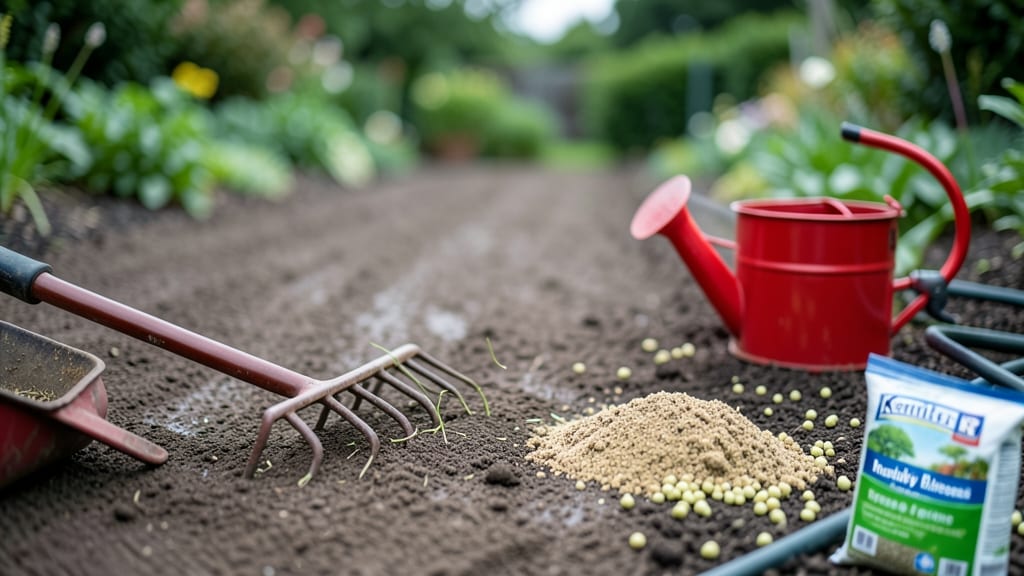
Putting grass seed down the right way means the difference between a lush lawn and patchy disappointment—even coverage is the secret weapon. 🌱 I’ve seen seed wasted because it clumped or blew away, or worse, got buried too deep.
The key is a smooth, consistent spread that lets every seed touch soil and sunlight without competition. Start by raking the soil until it’s level and free of debris—think "smooth as a golf green," not rough like sandpaper.
For cool-season grasses like fescue, aim for 1/4-inch deep seed placement; warm-season types like Bermuda need just 1/8-inch. A drop spreader makes this easy, but a hand broadcast followed by a rake works too. The goal?
No bare spots, no thick clumps—just an even carpet of seeds ready to wake up. Within 24 hours, you’ll be watering lightly but often—twice daily for the first week—to keep soil damp like a wrung-out sponge. Too much water drowns seeds; too little strangles them.
By week three, you’ll see uniform green sprouts if you nailed the coverage. Uneven germination? That’s usually seed-to-soil contact gone wrong. Works for new lawns, patch repairs, or overseeding—just adjust seed type and rate for your climate. Let’s get that seed down right the first time.
📚 In This Guide
- What you need
- Instructions
- Tips and common mistakes
- Wrapping up and next steps
What you need
- ● High-quality grass seed: Choose a blend suited to your climate and lawn type (e.g., cool-season for northern regions or warm-season for southern areas). Aim for 5–10 lbs per 1,000 sq ft, depending on seed type and coverage needs.
- ● Lawn rake or dethatcher: A bendable-tine rake (for overseeding) or a stiff-bristle dethatcher (for thick thatch) to loosen soil and remove debris.
- ● Broadcast spreader (or hand spreader): A drop spreader (for precision) or a broadcast spreader (for larger areas). Calibrate it to match your seed quantity!
- ○ Lawn roller (optional but helpful): A 100–150 lb roller to press seed into soil for better contact.
- ● Water source (hose or sprinkler): A gentle spray nozzle or soaker hose for consistent moisture.
- ● Soil test kit (recommended): Check pH and nutrient levels—ideal range is 6.0–7.0. Adjust with lime or fertilizer if needed.
- ● Starter fertilizer: A low-nitrogen, high-phosphorus blend (e.g., 5-10-10) to boost root growth.
- ● Erosion control blanket: For sloped areas to hold seed in place until germination.
- ● Garden gloves: Protect your hands from prickly debris or sharp tools.
- ● String or stakes: Mark boundaries for even seeding patterns.
Step-by-Step guide to achieving perfect grass seed coverage
Here's my foolproof method for spreading seed evenly—no clumps, no bare spots, just lush germination every time.
🌱 Step 1: Prepare the Soil Surface Like a Pro
Rake the bare soil until it's completely smooth and free of debris. You want a surface that looks like a freshly plowed field—no rocks, twigs, or uneven patches. I like to drag a level board across the area to catch any high spots. The goal is a perfectly flat canvas where seed can make consistent contact with soil.
Lightly tamp down any loose soil with the back of your rake. This prevents seed from sinking too deep when you water later. You'll know it's right when the surface feels firm but still crumbles easily under gentle pressure. Avoid compacting too hard—you want roots to penetrate easily, not fight through dense soil.
💧 Step 2: Use the Right Technique for Even Seed Distribution
I always use a broadcast spreader for large areas—it's the only way to get truly even coverage. Walk in straight lines, slightly overlapping each pass to prevent missed spots. For smaller patches, a hand spreader works well if you move deliberately. The key is consistency: maintain the same pace and height throughout.
Work in one direction first (like mowing patterns), then turn and go perpendicular. This crosshatching ensures no gaps appear between passes. You'll see the seed land in a uniform layer—no thick clumps or thin streaks. If you're seeding around existing grass, use a spreader with a shield to prevent seed from landing on established turf.
☀️ Step 3: Lightly Rake and Protect the Seed
After spreading, go over the area with a stiff-bristle rake and drag it lightly toward you. This presses seed just enough to ensure good soil contact without burying it too deep. You want seed to be no deeper than ¼ inch—any deeper and it won't have enough energy to reach light. The surface should look like fine sand with seed just peeking through.
Roll the area with a lawn roller if you have one—this helps eliminate air pockets and ensures consistent seed-to-soil contact. For small areas, just walk firmly across the surface. This step is crucial: proper coverage means every seed has equal opportunity to germinate. You'll notice some areas look slightly darker than others—that's normal and actually helps you spot where to focus your watering.
⏰ Step 4: Water Gently but Thoroughly
Water immediately after seeding, using a fine mist setting on your sprinkler or hose. You want the soil to be evenly moist but not soggy—like a damp sponge. Lightly water twice daily for the first week to keep the top ½ inch of soil consistently moist. You'll know it's right when water beads up on the surface but doesn't pool.
After the first week, gradually reduce to once daily but increase water volume. The goal is to keep the soil moist 1-2 inches deep—you can check by digging a small hole. If the soil below ½ inch feels dry, water more. Avoid heavy watering that can wash seed away or create crusting on the surface. You'll see the first sprouts in 7-14 days—that's your reward for even coverage!
🌿 Step 5: Maintain Consistent Moisture for Germination
For the first 3-4 weeks, keep the soil moist but never waterlogged. You'll need to water 2-3 times daily in hot weather to prevent the surface from drying out. I set a timer to remind myself—consistency is everything during this critical phase. You'll notice some areas sprout faster than others; this is normal as long as they're all getting equal moisture.
Once the grass reaches 2-3 inches tall, you can reduce watering to 2-3 times weekly. At this point, the roots have established enough to handle deeper watering. Avoid walking on new seedlings—they're fragile and can be easily damaged. You'll see the payoff when your lawn looks uniformly green with no thin patches, proving your even coverage worked perfectly.
Tips & tricks for perfect grass seed coverage
Took me a while to figure these out, so here's how to avoid the most common mistakes when putting down grass seed.
Soil Prep is Everything: In Step 1, don't skip the leveling test with your board—this catches those pesky high spots that can create uneven seed distribution. I've seen people miss this and end up with bare patches where the seed couldn't settle properly. Also, that light tamping is crucial: it should feel like pressing down a pillow, not like you're trying to make concrete. Too much pressure buries seed too deep, and that's a germination killer.
Spread Like a Pro: For Step 2, think of your seeding pattern like painting a fence—consistent strokes in one direction, then crosshatching. The overlapping passes are what prevent those frustrating thin spots. I've used hand spreaders on small areas, but they're tricky—even a slight change in pace creates uneven coverage. Walk at the same speed every time, and keep that spreader at the same height. You'll notice the seed lands in a beautiful, even layer when you do it right.
The Quarter-Inch Rule: In Step 3, that ¼-inch depth is non-negotiable. I've seen people bury seed too deep thinking it'll protect it, but it just suffocates those little sprouts. After raking, run your fingers over the surface—you should feel seed just below the surface, not hidden. And that roller trick? It's a game-changer for eliminating air pockets that can create dry spots. For small areas, just walk firmly across the surface—your weight does the same job.
Watering Wisdom: The fine mist setting in Step 4 is your secret weapon. I've ruined seed beds by using heavy streams that wash everything away. That twice-daily watering for the first week keeps the top ½ inch consistently moist—you'll know it's right when water beads up like morning dew. After that first week, you can increase volume but reduce frequency, always checking that 1-2 inch depth. The goal is to keep it damp like a wrung-out sponge, not soggy like a mud puddle.
Pro Tips for Best Way To Put Grass Seed Down
- Took me a while to figure these out, so here's how to avoid the most common mistakes when putting down grass seed.
- Soil Prep is Everything: In Step 1, don't skip the leveling test with your board—this catches those pesky high spots ...
- Spread Like a Pro: For Step 2, think of your seeding pattern like painting a fence—consistent strokes in one directio...
Frequently asked questions
Got questions about seeding your lawn like a pro? Here are the answers to the most common concerns—so you can tackle your project with confidence!
When is the best time to put grass seed down?
The ideal window is early fall (September-October) or early spring (March-April) when soil temps are 50–65°F. Avoid summer heat or winter frost—both can stress seeds and reduce germination. If you must seed in summer, opt for drought-tolerant varieties and water twice daily.
How long does it take for grass seed to grow?
Germination time varies by type:
- Cool-season grasses (Kentucky bluegrass, fescue): 7–21 days
- Warm-season grasses (Bermuda, Zoysia): 10–30 days
How often should I water grass seed?
Water lightly 2–3 times daily (morning, noon, evening) to keep the top 1–2 inches of soil damp. Avoid heavy streams that wash away seeds. Once sprouts appear, reduce to 1 inch per week. Pro tip: Use a sprinkler with a fine mist setting for even coverage.
What’s the best way to fix bare spots after seeding?
Start by raking the area to loosen soil, then apply a thin layer of compost for nutrients. Scatter seed sparingly (use a spreader for consistency) and top with ¼-inch of straw mulch to retain moisture. Water gently and avoid foot traffic for 2–3 weeks.
Can I use grass seed spreader for large areas?
A broadcast spreader saves time and ensures even coverage. For accuracy:
- Set the spreader to the recommended rate on the seed bag.
- Walk slowly in overlapping passes (like mowing a lawn).
- Avoid seeding on windy days—seeds can blow away.
Wrapping up and next steps
You’ve got everything you need to know to spread grass seed like a pro! 🌱 The best way to put grass seed down starts with proper prep—clearing debris, testing soil, and choosing the right seed blend—then follows through with even coverage and gentle care.
With patience and the right techniques, you’ll soon enjoy a lush, healthy lawn that’s the envy of the neighborhood.
Now that you’re ready to take action, grab your tools and get started! Whether you’re tackling a small patch or a full yard, your green thumb is about to shine. Happy seeding! 🌿