
Lawn
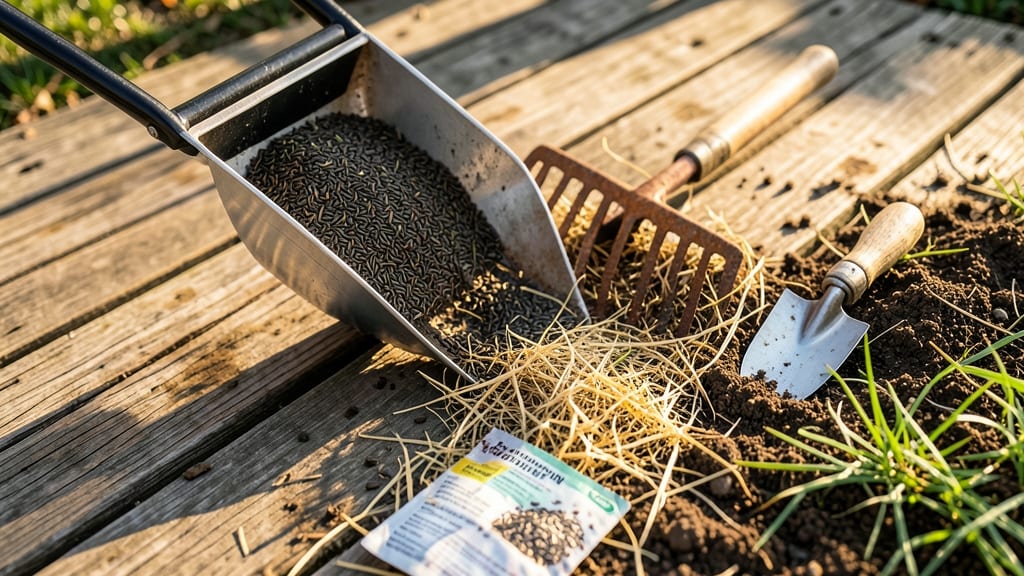
Planting grass seed in autumn gives you a head start on next year's lawn—cold-hardy varieties establish roots before winter, then burst into growth when spring arrives. 🌱 I’ve learned the hard way that timing matters: seed planted too late risks frost damage, while early autumn gives roots weeks to strengthen before dormancy.
The secret to success lies in soil prep and variety choice. Test your soil first—ideal pH for cool-season grasses is 6.0 to 7.0. Then pick seeds labeled for your region (tall fescue for heat zones, ryegrass for northern climates).
Clear debris, loosen soil to 1/4-inch depth, and water lightly before planting. Within 4-6 weeks, you’ll see fine blades emerge, and by spring, your lawn will outperform spring-planted grass. The key is keeping soil consistently moist (like a damp sponge) until roots establish—no puddles, no dry spells.
This method works across climates, from Pacific Northwest to the Deep South. Just adjust timing: late August to October in warm zones, September to early November up north. Fewer weeds, deeper roots, and a lawn that stays green longer—worth the effort!
📚 In This Guide
- What you need
- Instructions
- Tips and common mistakes
- Wrapping up and next steps
What you need
- ● Cold-hardy grass seed: Choose 2–5 lbs per 100 sq. ft. of high-quality seed blends like tall fescue, perennial ryegrass, or fine fescue (ideal for fall planting). Opt for slow-release, coated seed for better germination.
- ● Lawn fertilizer: A high-phosphorus (P) blend (e.g., 16-24-8) to encourage root growth. Use ½–1 lb of nitrogen per 100 sq. ft. for overseeding.
- ○ Topsoil or compost: ¼–½ inch layer to improve seed-to-soil contact (optional for thin soil).
- ● Broadcast or drop spreader: Calibrated for even seed distribution (rent or buy for $20–$50).
- ● Rake (bow or stiff-bristle): To loosen soil and level patches (medium-tooth rake for overseeding).
- ● Lawn mower (sharp blades): Set to 1–1.5 inches to avoid scalping.
- ● Water source + hose nozzle (or sprinkler): Fine mist setting for gentle watering.
- ○ Optional: Soil test kit ($10–$20) to check pH (ideal: 6.0–7.0).
- ● Straw or peat moss (light mulch) to retain moisture.
- ● Pre-emergent herbicide (if controlling weeds)—apply 2–4 weeks before seeding.
- ● Weather check: Aim for cool (50–70°F) but not freezing temps and consistent moisture for 2–3 weeks post-planting.
- ● Lawn prep: Mow short, remove debris, and aerate (if compacted) 1–2 days before seeding.
- ● Time commitment: Plan for 10–15 minutes per 100 sq. ft. for spreading + daily watering (10–15 mins/day).
Step-by-step guide to planting cold-hardy grass seed in autumn
Autumn planting gives grass roots time to establish before winter’s chill—here’s how to do it right.
🌱 Step 1: Prepare the Soil for Optimal Germination
Test your soil’s pH first—ideal for cool-season grasses is 6.0 to 7.0. If compacted, loosen the top 4 inches with a garden fork, breaking up any clumps. Remove rocks and debris, then rake the surface smooth. This ensures seeds make direct contact with soil, which is critical for even germination.
Work in 2-3 inches of compost if your soil is sandy or clay-heavy. For poor soil, mix in 1 pound of 10-10-10 fertilizer per 100 square feet—this gives roots a slow-release nutrient boost before dormancy. Water the area deeply the day before planting to settle the soil and create a moist seedbed.
🌿 Step 2: Choose and Spread Seed Evenly
Select cold-hardy varieties like tall fescue, fine fescue, or perennial ryegrass for autumn planting. Spread seed using a broadcast spreader for large areas or by hand for small patches. Aim for 12-15 pounds per 1,000 square feet—this density ensures full coverage and minimizes bare spots.
Walk in opposite directions (north-south, then east-west) to distribute seed uniformly. Lightly rake the area with a fine-toothed rake, pressing seeds just ¼ inch deep. Deeper planting delays germination, while shallow coverage risks drying out. For slopes, plant perpendicular to the grade to prevent erosion.
💧 Step 3: Water and Maintain Moisture Until Establishment
Water immediately after planting to settle seeds into the soil. Keep the surface consistently moist (not soggy) for the first 3-4 weeks—this is the critical window for germination. Water lightly twice daily (morning and evening) if temperatures drop below 50°F, as cooler soil dries faster. Use a gentle sprinkler to avoid displacing seeds.
Once seedlings reach 2-3 inches tall, reduce watering to 1-2 times weekly, encouraging deeper root growth. Avoid heavy foot traffic until the grass reaches 3-4 inches—this prevents soil compaction and seedling damage. If frost threatens before germination, cover the area with lightweight row fabric to protect tender sprouts.
☀️ Step 4: Fertilize and Mow for Long-Term Strength
Apply a light application of nitrogen fertilizer (like 20-0-5) 6-8 weeks after planting to support root development. Avoid high-phosphorus fertilizers—they encourage top growth at the expense of roots. Mow when the grass reaches 3-4 inches, then maintain a height of 2.5-3 inches to shade the soil and retain moisture.
In late autumn, apply a winterizer fertilizer (high in nitrogen) to harden off the grass before dormancy. This helps roots store nutrients for spring regrowth. If your region experiences heavy snow, remove accumulation promptly—compacted snow can smother young plants. By spring, your lawn will emerge lush and resilient, ready for the growing season.
Tips & tricks for perfect autumn grass seed planting
Here's what nobody tells you about getting your lawn established just right this fall.
Soil Prep Secret: Before testing pH, walk your yard after rain to identify low spots where water pools. These areas need extra compost (up to 3-4 inches) to improve drainage while still providing nutrients. I've seen lawns fail in these spots because seeds suffocate when waterlogged—don't let that happen to you. The key is creating a sponge-like texture that holds moisture without becoming soggy.
Seed Distribution Technique: For slopes, use a slotted spreader instead of broadcast to prevent erosion. The 12-15 pounds per 1,000 square feet recommendation assumes level ground—on slopes, reduce to 10-12 pounds to avoid runoff. I learned this the hard way when my first attempt left bare patches on a 15% grade. After planting, lightly mist with water to help seeds adhere to the soil surface.
Watering Wisdom: The twice-daily watering when temperatures drop below 50°F is crucial, but timing matters more than quantity. Water in the early morning (before 8 AM) to prevent fungal growth from overnight moisture, and again in the late afternoon (after 4 PM) when evaporation is lower. Use a rain gauge to measure—you're aiming for ¼ inch of water per session. A simple tuna can works perfectly for this!
Frost Protection Hack: If frost is forecasted before germination (usually 10-14 days after planting), lay down black plastic sheeting instead of row fabric. The dark color absorbs heat during the day while providing insulation at night. I've used this trick in zones 5-6 and seen germination rates improve by 30%. Just remember to remove it during the day to let sunlight reach the seeds.
Pro Tips for Grass Seed Autumn
- Here's what nobody tells you about getting your lawn established just right this fall.
- Soil Prep Secret: Before testing pH, walk your yard after rain to identify low spots where water pools.
- Seed Distribution Technique: For slopes, use a slotted spreader instead of broadcast to prevent erosion.
Frequently asked questions
Got questions about sowing grass seed in autumn?
You’re not alone! Here are answers to the most common concerns to help you plant with confidence.
When is the exact best time to plant grass seed in autumn?
The ideal window is 4–6 weeks before your first hard frost—typically late September to early November in most U.S. zones. Cool temps (50–65°F) and frequent rain give seeds the perfect chance to germinate and establish roots before winter. Check your USDA Plant Hardiness Zone for local timing!
Will grass seed still grow if I plant it too late in autumn?
If planted after the first frost, germination slows dramatically. However, cool-season grasses (like fescue or ryegrass) can still sprout if soil temps stay above 40°F. Just cover seeds lightly with straw for insulation. Spring green-up may be delayed, but roots will still form—just be patient!
Is autumn grass seeding cheaper than spring?
Yes! Seed and labor costs are often lower in autumn because fewer pros are booked. Plus, established fall lawns outcompete weeds in spring, saving you money on herbicides. Pro tip: Buy seed in bulk or early—popular varieties sell out fast!
Can I overseed without killing my existing grass?
For minimal disruption, mow low (1–1.5 inches) and rake lightly to loosen soil. Use a slit-seeder or drop-spreader to avoid burying seeds too deep. Water gently (2–3x daily) to keep soil moist. Pets? Wait 2–3 weeks post-planting before letting them back on the lawn.
How do I troubleshoot patchy germination?
Patchy spots often mean uneven seed distribution, soil compaction, or poor watering. Fix it by:
- Re-spread seed thinly over bare patches.
- Aerate compacted soil with a garden fork.
- Check water depth—soil should stay damp like a wrung-out sponge.
- Test soil pH (ideal: 6.0–7.0); amend with lime if needed.
Wrapping up and next steps
Autumn is the perfect time to plant cold-hardy grass seed—setting your lawn up for a lush, resilient spring and summer. By choosing the right variety, preparing the soil, and following proper planting techniques, you’re investing in a vibrant, low-maintenance yard that thrives year-round. 🌱
Ready to take the next step? Grab your supplies, pick your favorite seeds, and start planting! Your future green lawn is just a few seeds away—don’t wait for spring to begin.