
Propagation
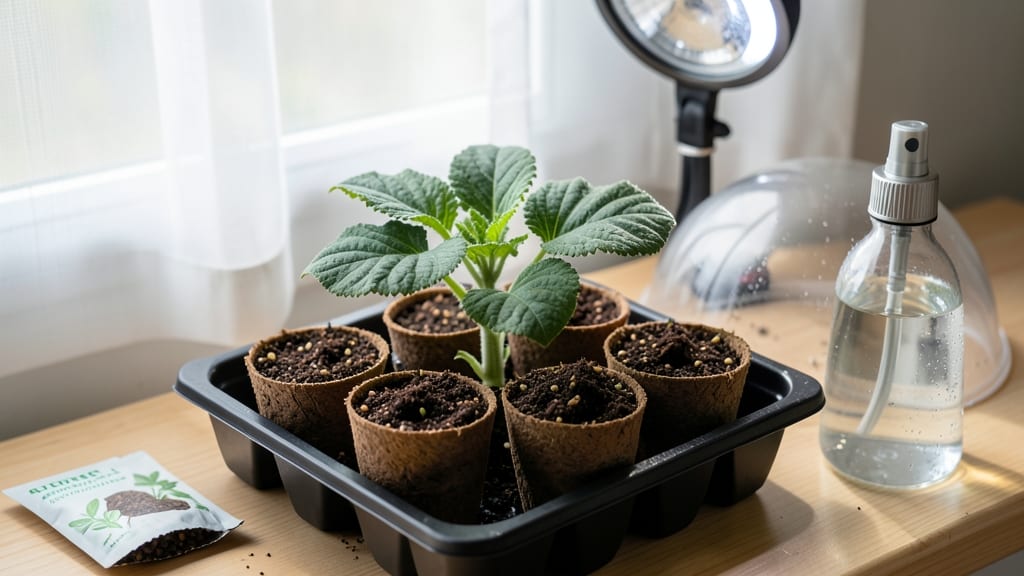
Growing zucchini from seed indoors isn't just possible—it's a game-changer for summer harvests. 🌱 The secret lies in fast germination (7 days or less) using lightweight loam that keeps those delicate roots happy while they're still cooped up inside.
I've grown dozens of zucchini plants this way, and the key is controlling warmth, moisture, and light before they even hit the soil outside.
You'll need just a few simple supplies: quality zucchini seeds (pick a compact variety for indoor starts), small seedling trays or pots (2-3 inches deep), lightweight loam-based seed-starting mix, and a heat mat or warm spot near a sunny window.
The magic happens when you keep that soil consistently warm (70-85°F) and moist—no soggy bottoms, just damp enough to encourage quick sprouts. Most people overlook the heat part, and that's where germination stalls.
Within a week, you'll see those first green leaves poking through, and by week 3, seedlings will be ready to transplant. The payoff? Plants that outpace store-bought starts by weeks, with thicker stems and stronger roots that handle the move outside like pros.
No more wilted seedlings or weak plants—just a head start on summer's most productive vegetable.
Works perfectly in apartments, sunrooms, or even a sunny kitchen counter. Here's how to set it up without the guesswork—no green thumb required.
📚 In This Guide
- What you need
- Instructions
- Tips and common mistakes
- Wrapping up and next steps
What you need
- ● Zucchini seeds: 3–5 high-quality, non-GMO seeds (e.g., Black Beauty or Gold Rush varieties).
- ● Seed-starting mix: 1–2 quarts of lightweight, sterile loam-based or coco coir mix (avoid garden soil—it’s too dense!).
- ● Containers: 3–5 small pots (3–4 inches deep) or
- ● A seed tray with individual cells (2–3 inches deep).
- ● Grow lights or sunny window: A full-spectrum LED grow light (12–16 hours/day) or a south-facing window (6+ hours of direct light).
- ● Spray bottle: For gentle watering (avoid over-saturating seeds!).
- ○ Heat mat (optional but helpful): A small seedling heat mat (70–85°F) to speed up germination.
- ● Plastic wrap or humidity dome: To retain moisture while seeds sprout.
- ● Fertilizer: A balanced liquid fertilizer (5-5-5 or 10-10-10) diluted to half-strength for seedlings.
- ● Tweezers or small spoon: For delicate seed placement.
- ● Timer (for grow lights): To maintain consistent light cycles.
- ● Pencil or toothpick: For making small holes in soil (if not pre-moistened).
Step-by-step instructions for growing zucchini from seed indoors
Here's how to get zucchini seedlings off to a lightning-fast start—no waiting weeks for germination.
🌱 Step 1: Prepare Containers and Lightweight Loam
Zucchini seeds germinate best in lightweight loam that drains freely but retains moisture. Fill 4-inch deep pots (one per seedling) with the loam, leaving ½ inch of space below the rim. I press the soil down gently with my fingers—just enough to remove air pockets, but not so hard it compacts.
Moisten the soil until it feels like a damp sponge—squeeze a handful and it should hold together without dripping. If your loam feels dry, add water gradually until the surface is evenly damp. The key here is consistent moisture without sogginess, which zucchini roots despise.
🌱 Step 2: Sow Seeds at the Right Depth for Fast Germination
Plant one seed per pot at a depth of 1 inch—too shallow and they’ll dry out before sprouting. I use a toothpick to poke a hole, then drop the seed in and cover it with a thin layer of soil. Press lightly around the edges to secure the seed without burying it deeper.
Water gently with a spray bottle until the soil surface looks uniformly damp. Place the pots in a warm spot (75-85°F)—a seedling heat mat speeds things up dramatically. Expect germination in 3-7 days, but don’t be surprised if some pop up in just 24 hours under ideal conditions.
☀️ Step 3: Provide Bright Light Immediately After Sprouting
The moment you see cotyledons (those first tiny leaves), move the seedlings to a south-facing window or under grow lights. Zucchini seedlings grow fast, and leggy stems mean they’re stretching for light. I keep my grow light 2-3 inches above the plants and adjust it as they grow.
Rotate the pots quarter-turn daily so they don’t lean toward the light. You’ll know they’re getting enough light when the leaves are dark green and compact—not pale or stretched. Without sufficient light, seedlings become weak and prone to disease.
💧 Step 4: Water and Fertilize for Strong Growth
Water when the top inch of soil feels dry—zucchini roots need consistent moisture but hate soggy soil. I use room-temperature water to avoid shocking the roots. Fertilize lightly with a balanced liquid fertilizer (10-10-10) once the first true leaves appear, then again in 2 weeks. Too much fertilizer now burns tender roots.
Watch for yellowing leaves—this usually means overwatering or poor drainage. If you see it, let the soil dry out slightly before watering again. Strong seedlings will have thick stems and healthy foliage within 3-4 weeks, ready for transplanting outdoors.
Tips & tricks for fast zucchini seedling success
Speeding up germination and growing sturdy zucchini seedlings indoors takes just a few strategic moves—here's how to maximize your chances of success.
Soil Preparation Secret: Before planting, gently warm your lightweight loam to 75-85°F by placing the filled pots in a sunny window or on a seedling heat mat for 24 hours before sowing. Warm soil triggers faster germination—you'll often see sprouts in just 24 hours instead of waiting the full 3-7 days. Confession: I skipped this step for years and wondered why some seeds always took longer to sprout!
Seed Placement Technique: When creating that 1-inch deep planting hole, make it slightly wider than the seed itself. This prevents the seed from sitting too tightly against the sides, which can slow down moisture absorption. After planting, press the soil around the edges with your finger—just enough to make contact, not to compress. This creates a tiny air pocket that helps the seed "breathe" during the critical first 24 hours.
Lighting Strategy: If you don't have a south-facing window, use a simple LED grow light on a timer for 12-14 hours daily. Position it 2-3 inches above the seedlings and adjust as they grow. The key is to keep the light intensity bright but not scorching—you should be able to hold your hand near it for 5 seconds without feeling heat. I learned this the hard way after frying the tips of my first batch of seedlings!
Fertilizer Timing: That first 10-10-10 application after the first true leaves appear is crucial, but here's what nobody tells you—dilute it to half-strength for the first feeding. Zucchini seedlings are sensitive to salt buildup from concentrated fertilizers, which can cause leaf burn. After that initial gentle feeding, you can use full strength for the 2-week follow-up.
Pro Tips for Growing Zucchini From Seed Indoors
- Speeding up germination and growing sturdy zucchini seedlings indoors takes just a few strategic moves—here's how to maximize your chances of success.
- Soil Preparation Secret: Before planting, gently warm your lightweight loam to 75-85°F by placing the filled pots in a sunny window or on a seedling heat mat for 24 hours before sowing.
- Seed Placement Technique: When creating that 1-inch deep planting hole, make it slightly wider than the seed itself.
Frequently asked questions
Can I grow zucchini indoors year-round?
While zucchini can grow indoors, they thrive best with 12+ hours of sunlight daily. Supplement with grow lights (LED or fluorescent) if natural light is limited. Indoor zucchini may produce fewer fruits and grow slower than outdoor plants. Aim for a sunny windowsill or grow tent for optimal results.
How long does it take for zucchini seeds to germinate indoors?
With the right conditions—warmth (70–90°F), moisture, and darkness—zucchini seeds typically sprout in 5–7 days. Use a heating mat if your home is cool. Once sprouts emerge, move them to bright light (12+ hours/day) to prevent leggy seedlings. Pro tip: Keep soil consistently moist but not soggy!
What’s the best soil mix for indoor zucchini seeds?
Use a lightweight, well-draining potting mix (like seed-starting blend with perlite or vermiculite). Avoid garden soil—it’s too dense and can compact. Mix in compost or worm castings for nutrients. A 50/50 blend of coco coir and perlite works great for fast germination and healthy roots.
Why aren’t my zucchini seeds sprouting?
Check these common issues:
- Temperature too low (<60°F): Use a heat mat.
- Too dry: Mist seeds daily or use a humidity dome.
- Old seeds: Zucchini seeds lose viability after 4–5 years.
- Buried too deep: Plant seeds ½ inch deep max.
Can I transplant indoor zucchini seedlings outside later?
Yes! Once seedlings have 2–3 true leaves and strong stems, harden them off for 7–10 days (gradually expose to outdoor conditions). Transplant on a cloudy day or late afternoon to avoid shock. Space plants 18–24 inches apart in full sun. Warning: Zucchini are sensitive to cold—wait until soil is 60°F+.
Wrapping up and next steps
Growing zucchini from seed indoors is a rewarding journey that starts with patience, a little light, and the right soil! With just 7 days to germination and lightweight loam, you’re well on your way to a bountiful harvest.
Whether you’re a seasoned gardener or a curious beginner, this method proves that big results can come from small starts.
Now that you’re armed with tips and tricks, it’s time to get planting! Once your seedlings sprout and grow, you’ll be ready to transition them outdoors—or keep them thriving indoors with the right setup. Happy growing, and may your zucchini be plentiful! 🌱✨