
Propagation
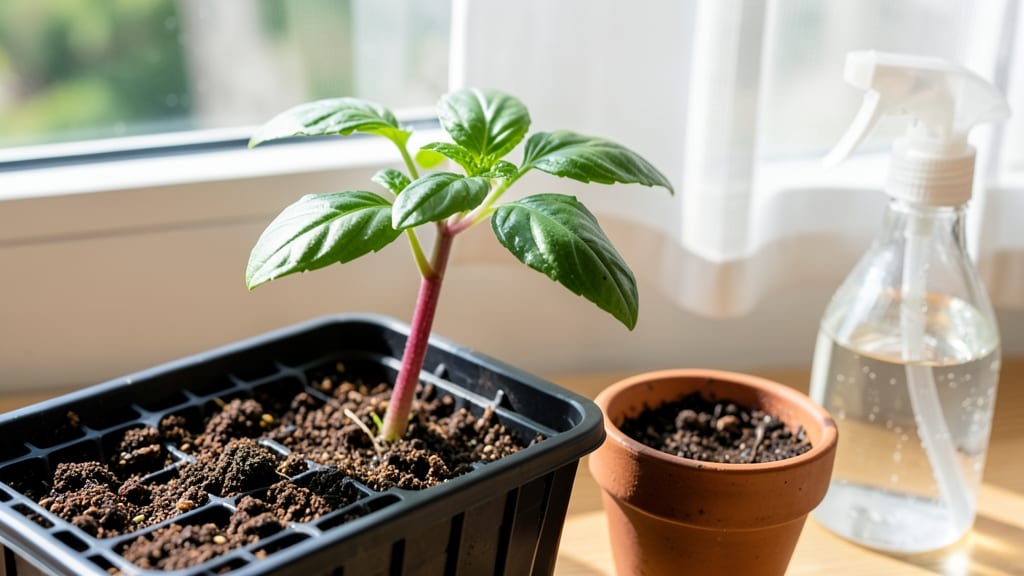
Growing basil from seed indoors means fresh herbs year-round in just 10-14 days. 🌱 I’ve grown basil indoors for years, and the secret to success isn’t complicated—it’s about light, warmth, and patience.
The first true leaves appear faster than you’d expect, and soon you’ll have a thriving plant ready for your kitchen.
You’ll need just five simple supplies: seeds, a small container, well-draining soil, a spray bottle, and a sunny spot. Basil germinates best in 70-80°F soil, so a warm windowsill or a seedling heat mat speeds things up. Avoid overwatering—basil hates soggy soil, and damp conditions invite mold.
By the time your seedlings are 3-4 inches tall, you’ll be pinching back the tops to encourage bushier growth. The smell of fresh basil in your kitchen is unbeatable, and you’ll never buy wilted store-bought again. Plus, homegrown basil stays fragrant and flavorful far longer than grocery store versions.
This method works for any variety—Genovese, Thai, or Purple—so pick your favorite and get growing. Whether you’re a beginner or a seasoned gardener, indoor basil is the easiest way to keep fresh herbs on hand all winter long.
📚 In This Guide
- What you need
- Instructions
- Tips and common mistakes
- Wrapping up and next steps
What you need
- ● Basil seeds: 1 packet (about 100-200 seeds—Sweet Basil or Genovese are great choices!)
- ● Seed-starting trays or small pots: 2-4 (4-6 inches deep, with drainage holes)
- ● Seed-starting mix: 1 bag (lightweight, sterile, and well-draining—avoid garden soil!)
- ● Plastic wrap or humidity dome: 1 (to retain moisture while seeds germinate)
- ● Spray bottle (with water): 1 (for gentle watering—no heavy streams!)
- ● Grow lights or a sunny windowsill: 1 (south-facing window gets 6+ hours of light daily; grow lights are ideal for consistency)
- ○ Fertilizer (optional but helpful): 1 small bottle (balanced liquid fertilizer, like 5-5-5, diluted to half-strength)
- ● Heating mat: 1 (speeds up germination—set to 70-75°F if seeds take longer to sprout)
- ● Plant labels: A few (to track varieties and planting dates!)
- ● Pruning scissors: 1 (for harvesting leaves without damaging the plant)
- ● Self-watering planter: 1 (if you travel often or forget to water)
Step-by-step instructions for growing basil from seed indoors
Here's the fast, foolproof method I use to get basil seedlings popping in under a week.
🌱 Step 1: Prep Seeds and Containers for Germination
Start by soaking the basil seeds in lukewarm water for 12 hours—this softens the tough outer coating and speeds up germination. I use a small bowl with just enough water to cover the seeds completely. After soaking, drain them and let them sit for 30 minutes to absorb excess moisture.
Fill your 4-inch seed trays with moistened seed-starting mix (never garden soil—it's too dense). Press the mix down gently until it's firm but not compacted. Make small ¼-inch-deep indentations with your finger, spacing them about 1 inch apart. Drop 1-2 seeds into each indentation—you'll thin later. Cover lightly with a sprinkle of additional mix.
💧 Step 2: Create a Humid, Warm Germination Environment
Cover the tray with a clear plastic dome or plastic wrap to trap warmth and moisture. Place it in a warm spot (75-85°F)—a seedling heat mat works best, but a sunny windowsill or top of the fridge also works. Basil seeds germinate fastest in warmth, so avoid cold drafts or air conditioning vents.
Check daily for condensation on the dome—this means the humidity is right. If the soil surface looks dry, mist lightly with water. You'll see the first sprouts in 5-10 days, but don't remove the dome until 50% of seeds have sprouted. Removing it too soon causes the soil to dry out too quickly.
☀️ Step 3: Move to Bright Light Immediately After Sprouting
The instant those first tiny leaves appear, remove the dome and place the tray under grow lights or a south-facing window. Basil seedlings need 12-14 hours of light daily to prevent leggy growth. I use a T5 fluorescent grow light positioned 2-3 inches above the seedlings—raise it as they grow.
Watch for first true leaves (the second set after the initial cotyledons). Once they appear, you'll know the seedlings are strong enough to handle gentle care. Thin to the strongest seedling per cell, snipping the weaker ones at soil level with clean scissors. This prevents competition and gives your basil room to grow.
🌿 Step 4: Maintain Optimal Conditions for Fast Growth
Water from the bottom by placing the tray in ½ inch of water for 10-15 minutes every 2-3 days. Basil hates soggy soil but also can't tolerate drying out. The soil should feel moist but not wet to the touch. Avoid wetting the leaves to prevent fungal diseases.
Rotate the tray a quarter turn daily so seedlings grow straight instead of leaning toward the light. You'll see new leaves emerge within 1-2 weeks—that's your signal everything is working. Once seedlings have 3-4 true leaves and are 2-3 inches tall, they're ready for their own 4-inch pots.
✂️ Step 5: Transplant and Encourage Bushy Growth
Fill the new pots with fresh seed-starting mix and make a hole deep enough to bury the seedling up to its first set of true leaves. Gently remove the seedling from its tray, keeping the root ball intact, and place it in the hole. Press the soil firmly around the base to eliminate air pockets.
Pinch off the top set of leaves when the plant reaches 6 inches tall—this encourages bushier growth. You'll see new side shoots form within 5-7 days. Keep the soil consistently moist and fertilize lightly with a balanced liquid fertilizer (10-10-10) every 2-3 weeks once the plant is established.
Tips & tricks for growing basil from seed indoors
Avoid these common pitfalls—and watch your basil seedlings grow like a pro in record time.
Seed Prep Secret: After your 12-hour soak, don't skip the 30-minute drain time! I learned this the hard way—overly wet seeds can develop mold in the moist seed-starting mix. Spread them on a clean paper towel to dry slightly before planting. This step prevents that musty smell and ensures healthy germination.
Warmth Hack: Basil seeds need that 75-85°F range to germinate, but not all warm spots are equal. I place my seed trays on top of my fridge during the day—it stays warm from the compressor and provides consistent heat. Avoid kitchen counters near air conditioning vents, which can create temperature swings that slow germination.
Light Transition Tip: When moving seedlings to grow lights in Step 3, start with the T5 light just 2 inches above them for the first 24 hours. Basil seedlings are sensitive to intense light initially. Gradually raise it to 3 inches as they grow—this prevents leaf burn while ensuring strong, stocky growth. Watch for leaves turning pale yellow near the light source as your warning sign.
Watering Wisdom: The 10-15 minute bottom-watering method works perfectly, but timing matters. I set a timer for exactly 12 minutes—long enough to saturate the soil but not so long the tray becomes a swamp. After watering, always tip the tray to drain excess water from the bottom. Soggy roots are basil's worst enemy, leading to damping-off disease.
Pro Tips for Grow Basil From Seed Indoors
- Avoid these common pitfalls—and watch your basil seedlings grow like a pro in record time.
- Seed Prep Secret: After your 12-hour soak, don't skip the 30-minute drain time!
- Warmth Hack: Basil seeds need that 75-85°F range to germinate, but not all warm spots are equal.
Frequently asked questions
Got questions about growing basil from seed indoors?
You’re not alone! Here are answers to the most common concerns—plus a few pro tips to keep your plants thriving.
How long does it take for basil seeds to germinate indoors?
Basil seeds typically sprout in 7–14 days when kept in warm, moist conditions (around 70–80°F). For faster results, use a seedling heat mat or place your tray on top of the fridge. Patience is key—don’t overwater or disturb the soil while waiting!
Can I grow basil indoors year-round, or does it need a break?
Yes! Basil is a tender annual, meaning it thrives indoors without dormancy. However, after 6–8 weeks, it may flower and taste bitter. To extend harvests, prune regularly and replace old plants with new seeds. A south-facing window or grow light keeps it happy all year.
Why are my basil seeds not sprouting? Troubleshooting tips.
Common culprits:
- Too cold: Basil needs warmth—keep soil above 60°F.
- Poor moisture: Mist seeds lightly daily or use a humidity dome.
- Old seeds: Store-bought seeds last 1–2 years; test viability by soaking in water (floaters = bad).
- Deep planting: Seeds need light—press them just below the soil surface.
Do I need to use grow lights, or is natural sunlight enough?
Natural light works if your basil gets 6+ hours of direct sun daily. Without it, use a grow light 12–16 hours/day (LED or fluorescent) to prevent leggy, weak plants. Place lights 2–4 inches above the seedlings and adjust as they grow.
Can I grow basil from store-bought stems instead of seeds?
Snip a 4–6 inch stem from a healthy basil plant, remove lower leaves, and place it in water. Roots should appear in 1–2 weeks. Transfer to soil once roots are 1–2 inches long. This method is faster and often more successful than seeds for beginners!
Pro Tip: Rotate your basil pot weekly to ensure even light exposure and prevent lopsided growth.
Wrapping up and next steps
Growing basil from seed indoors is a rewarding journey that brings fresh, fragrant herbs straight to your kitchen—without the hassle of store-bought pots! With the right setup, patience, and a little love, you’ll soon enjoy harvests of vibrant leaves perfect for pesto, salads, or garnishes. 🌱
Now that you’re armed with tips and tricks, why not expand your indoor garden? Try growing other fast-germinating herbs like cilantro or parsley next—your windowsill (and taste buds) will thank you! Ready to start? Grab your seeds and get planting!