Propagation
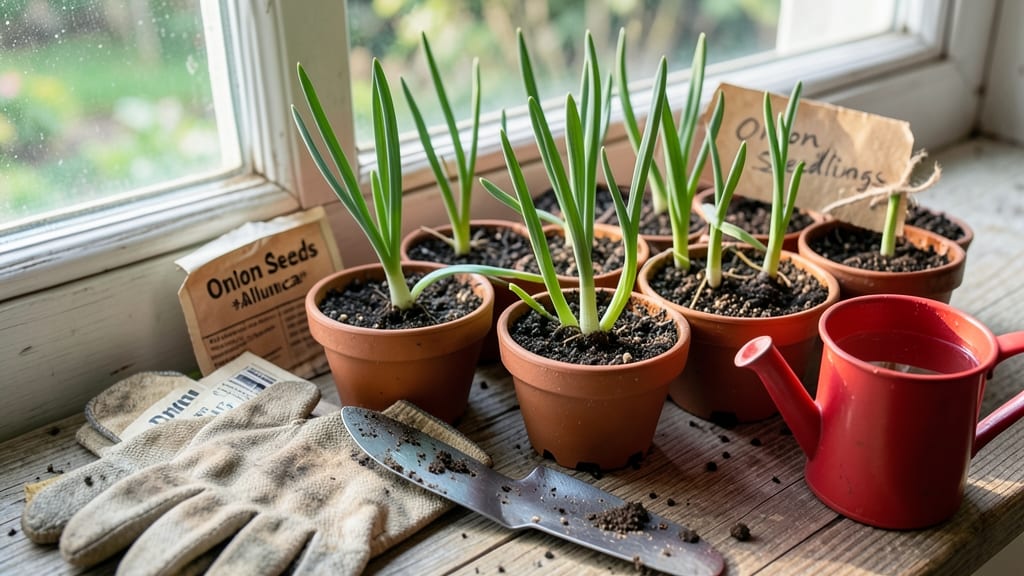
Growing onions from seed in pots delivers harvests faster than you’d expect—fast-growing varieties like 'Red Baron' or '1897' mature in just 90 days when started indoors. 🌱 I’ve grown onions this way for three seasons, and the key is patience (they’re slow to sprout) paired with the right container setup.
The payoff? Fresh, sweet onions without the weeding or soil-borne diseases that plague in-ground plantings.
You’ll need shallow pots (6 inches deep) with drainage holes, a well-draining soil mix (50% potting soil, 50% perlite or compost), and a sunny windowsill or grow light. Plant seeds ½ inch deep, 1 inch apart, and keep the soil consistently moist—not soggy.
Most people rush germination, but onions take 10-20 days to break through the soil. Once they do, thin seedlings to 2 inches apart to prevent crowding.
By mid-spring, you’ll see green tops reaching for the sky, and by summer, you’ll be harvesting baby onions or letting bulbs mature in the pot. The beauty of container onions? No weeds, no pests, and no wasted space—even a balcony works.
Just watch for yellowing leaves (too much water) or stunted growth (not enough light) and adjust quickly. These are the easiest onions I’ve ever grown.
Pro tip: Fertilize lightly every 3-4 weeks with a balanced organic fertilizer once shoots appear. And if you’re short on space, try stackable pots or a vertical growing system. The first harvest will change how you think about onions forever—no more store-bought blandness, just crisp, homegrown flavor in every bite.
📚 In This Guide
- What you need
- Instructions
- Tips and common mistakes
- Wrapping up and next steps
What you need
- ● Onion seeds: Choose fast-germinating varieties like 'Red Trouser', 'Stuttgarter', or 'Everlasting' (1–2 packets, ~500–1,000 seeds per packet).
- ● Containers: Pots with drainage holes, 6–8 inches deep and at least 6 inches in diameter (2–4 pots per variety).
- ○ Potting mix: Well-draining, seed-starting mix (1–2 bags, ~1–2 cubic feet). Optional: Amend with perlite or vermiculite for extra aeration.
- ● Watering can or spray bottle: With a fine rose attachment for gentle watering.
- ● Grow lights or sunny windowsill: Onions need 12–16 hours of light daily (LED grow lights work great for indoor setups).
- ● Plant labels: Small sticks or markers to track varieties.
- ● Fertilizer: Balanced, water-soluble fertilizer (5-10-5 or 10-10-10) for seedlings.
- ● Scissors or knife: For trimming seedlings (if thinning is needed).
- ● Heating mat: Speeds up germination (70–75°F is ideal).
- ● Humidity dome or plastic wrap: Keeps seeds moist during germination.
- ● Organic mulch: Straw or shredded leaves to retain moisture in pots.
- ● pH test kit: Ensures soil pH is 6.0–7.0 (onions prefer slightly acidic to neutral soil).
- ● Compost or worm castings: Boosts nutrient content for long-term growth.
Step-by-step instructions for growing onions from seed in pots
Here's how to get crisp, flavorful onions from seed in just 12 weeks—no green onions, no sets, just homegrown bulbs.
🌱 Step 1: Choose Fast-Germinating Varieties and Prepare Containers
Select short-day onion varieties like 'Red Trouser' or 'White Sweet Spanish'—they mature in 90-120 days and thrive in containers. Each pot should hold 4-6 plants (since onions grow in clusters). Use 5-6 inch deep pots with drainage holes—shallow containers stunt bulb development.
Fill pots with well-draining potting mix (never garden soil—it compacts and causes rot). I add 1 part perlite to 3 parts mix for extra aeration. Moisten the soil until damp but not soggy—you want it to hold moisture without pooling. Tap the pot gently to settle the mix without compacting it.
🌱 Step 2: Sow Seeds at the Right Depth and Spacing
Plant seeds ¼ inch deep, spacing them ½ inch apart in rows 1 inch apart. Onion seeds are tiny—use tweezers to avoid burying them too deep (they need light to germinate). I press each seed into the soil with my finger, then cover lightly with a fine mist of water.
Label pots immediately—seedlings look identical until they develop true leaves. Place pots in a warm spot (65-75°F) under grow lights or bright indirect light. Germination takes 10-21 days (longer in cool conditions), so be patient. Keep soil consistently moist but never waterlogged—damping-off fungus attacks weak seedlings.
☀️ Step 3: Provide Light and Thin Seedlings for Strong Growth
Once seedlings emerge, move them to 6+ hours of direct sunlight daily. South-facing windows work, but supplement with LED grow lights if natural light is weak. Leggy seedlings (thin stems, leaves spaced far apart) mean insufficient light—adjust within 2 inches of the plants.
When seedlings reach 2 inches tall and show first true leaves (not the tiny seed leaves), thin to 2-3 plants per pot. Use scissors to snip excess seedlings at soil level—pulling risks disturbing roots. This reduces competition and gives remaining plants room to develop large, plump bulbs.
💧 Step 4: Fertilize and Water for Bulb Development
After thinning, feed every 2 weeks with a balanced liquid fertilizer (10-10-10) diluted to half strength. Onions need nitrogen early for leaf growth but phosphorus later for bulb swelling. Switch to a 5-10-10 formula when tops fall over (signs of maturity).
Water deeply 2-3 times per week, ensuring moisture reaches 3-4 inches deep. Let the top inch of soil dry between waterings—overwatering causes rot, but underwatering stunts bulbs. Mulch with ¼ inch of straw to retain moisture and prevent soil crusting. You’ll see bulbs forming when tops flop over—this is your cue to reduce watering to harden skins.
⏰ Step 5: Harvest and Cure for Long-Term Storage
Onions are ready when tops yellow and fall over (usually 100-120 days after sowing). Gently lift bulbs from the pot—don’t wash them. Let them dry in a shady, well-ventilated spot for 2-3 weeks (longer for storage varieties). This cures skins and prevents rot.
Store cured onions in a cool (40-50°F), dark, dry place for up to 6 months. Check periodically for soft spots—discard any that spoil. For immediate use, harvest smaller bulbs earlier (they’ll be milder and sweeter).
Tips & tricks for perfect onion seed growth in pots
Real talk: Growing onions from seed in pots is easier than you think—once you know these game-changing tricks to maximize your small-space harvest.
Variety Selection Matters: Stick to the short-day varieties mentioned ('Red Trouser' or 'White Sweet Spanish')—they're specifically bred for container growing and mature in that 90-120 day window. Long-day varieties take longer and often struggle in pots. Pro tip: Check your seed packet for "days to maturity" to ensure you're choosing the right type for your climate zone.
Container Depth is Non-Negotiable: Those 5-6 inch deep pots aren't just suggestions—they're essential. Shallow containers (under 5 inches) stunt bulb development because onions need room for their roots to grow downward. If you're working with limited space, stack pots vertically or use deep window boxes instead of shallow ones.
Light is the Real Game-Changer: The 6+ hours of direct sunlight requirement is strict—onions need full sun to develop properly. Here's what I do when natural light is limited: Place pots on a sunny windowsill during winter months, then supplement with LED grow lights for 12-14 hours daily. Position lights within 2 inches of the plants for maximum efficiency. Watch for "leggy" seedlings (thin stems with spaced-out leaves)—this is your signal to add more light immediately.
Thinning Technique Prevents Heartbreak: When you thin to 2-3 plants per pot at the 2-inch mark, use scissors instead of pulling seedlings. Pulling disturbs the remaining plants' roots and can introduce soil-borne diseases. Snip at soil level for clean cuts that heal quickly. This might seem like a small detail, but it makes a huge difference in bulb size and plant health—trust me, I've tried both methods!
Pro Tips for Grow Onions From Seed In Pots
- Real talk: Growing onions from seed in pots is easier than you think—once you know these game-changing tricks to maximize your small-space harvest.
- Variety Selection Matters: Stick to the short-day varieties mentioned ('Red Trouser' or 'White Sweet Spanish')—they're specifically bred for container growing and mature in that 90-120 day window.
- Container Depth is Non-Negotiable: Those 5-6 inch deep pots aren't just suggestions—they're essential.
Frequently asked questions
Got questions about growing onions from seed in pots?
You’re not alone! Here are answers to the most common queries to help you grow confidently—even in small spaces.
How long does it take for onion seeds to germinate in pots?
Onion seeds typically take 10–21 days to sprout, depending on temperature and moisture. Keep the soil consistently moist (not soggy) and place pots in a warm, sunny spot (65–75°F). Pro tip: Use a heat mat if your home runs cold—this can speed up germination by 3–5 days! Patience is key; thin seedlings to 1–2 inches apart once they’re 2–3 inches tall.
Can I grow onions from seed indoors year-round?
Yes, but timing matters! Onions need 100–120 days to mature, so start seeds indoors 12–14 weeks before your last frost date for outdoor transplanting. For winter harvests, use grow lights (12–14 hours/day) and keep temps above 50°F. Short-day varieties (like ‘Red Baron’) are best for indoor pots—they bolt less than long-day types.
What’s the best pot size for growing onions from seed?
Use pots at least 6 inches deep and 4–6 inches wide per onion plant. Cluster 3–4 seeds in one pot (thin to 1–2 strongest seedlings) or give each seed its own small pot (2–3 inches wide). Drainage is critical! Add a layer of gravel or perlite to prevent root rot. Larger pots (10+ inches) work for multiples but may need extra fertilizer.
Why are my onion seedlings wilting or turning yellow?
Wilting or yellowing often signals overwatering, underwatering, or pests. Check soil moisture—it should stay evenly damp but not waterlogged. Common culprits:
- Fungal issues: Reduce watering and improve airflow.
- Thrips or aphids: Spray with neem oil or insecticidal soap.
- Nutrient deficiency: Feed with a balanced fertilizer (10-10-10) every 4 weeks.
If seedlings collapse suddenly, it might be damping-off—remove affected plants and sterilize pots with hydrogen peroxide (3%) before replanting.
Can I save seeds from store-bought onions to grow my own?
Not reliably! Most grocery-store onions are hybrids (crossbred for uniformity) and won’t produce true-to-type seeds. For seed-saving, grow open-pollinated varieties like ‘Yellow Sweet Spanish’ or ‘From the North.’ Let some plants bolt (flower) and dry the seed heads indoors before storing in a cool, dark place for up to 2 years.
What’s the fastest onion variety to grow in pots?
For quick harvests (60–90 days), try these fast-maturing varieties:
Variety
Days to Harvest
Best For
‘Red Baron’
85–90 days
Short-day, great for pots
‘Evergreen Hardy White’
90–100 days
Cold-tolerant, mild flavor
‘Stuttgarter’
100–110 days
Sweet, good for green onions
Start these early indoors or use grow lights to jumpstart growth in cool climates.
Wrapping up and next steps
Growing onions from seed in pots is a rewarding and space-efficient way to enjoy fresh, homegrown harvests—even on a balcony or windowsill! 🌱 With the right fast-germinating varieties and a few simple steps, you’ll soon be savoring the crisp, flavorful onions you’ve nurtured yourself.
Whether you’re a beginner or a seasoned gardener, this method proves that big flavors don’t need big spaces.
Now that you’re armed with the know-how, roll up your sleeves and start planting! For even more success, experiment with different varieties or try succession planting to enjoy a continuous harvest. Happy growing—your kitchen (and taste buds) will thank you! 🥳