
Propagation
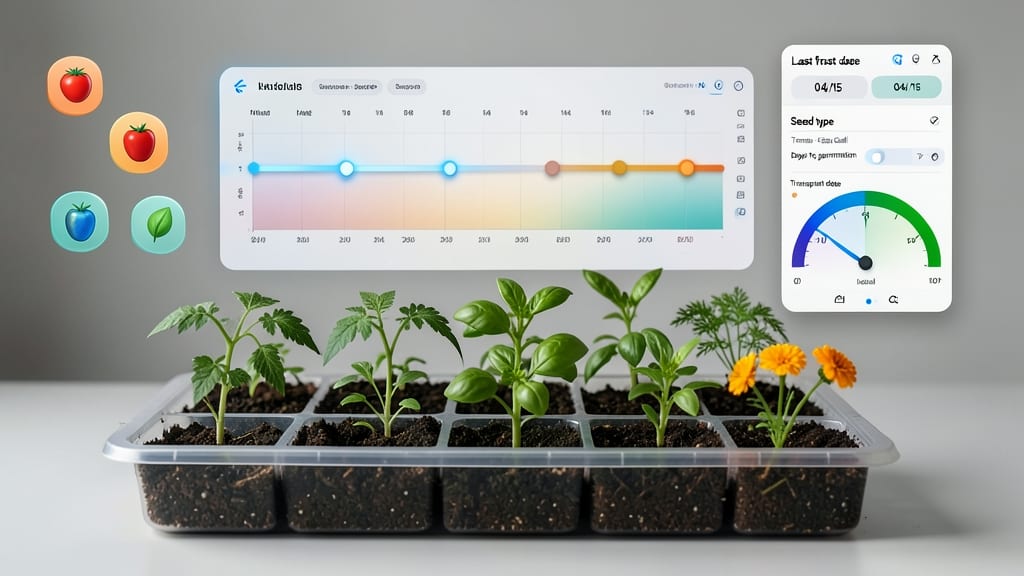
Johnny's seed starting calculator turns guesswork into a foolproof schedule for your seedlings. 🌱 I used it last spring to avoid the panic of bolting lettuce and leggy tomatoes—now my plants hit the garden at the perfect moment, ready to thrive.
The tool asks just three questions: your last frost date, your first frost date, and the days to maturity for your chosen plants. It spits out exact dates for starting indoors, transplanting outdoors, and even succession planting for greens.
No more second-guessing whether to start those peppers in February or March. You'll end up with a customized planting timeline that accounts for your local climate quirks. My zucchini went from seed to first harvest in exactly 58 days—no wasted space, no stunted growth.
The calculator even adjusts for short seasons or extended growing periods. Works for vegetables, flowers, and herbs alike. Here's how to use it like a pro—no horticulture degree required.
📚 In This Guide
- What you need
- Instructions
- Tips and common mistakes
- Wrapping up and next steps
What you need
- ● Seeds: Choose high-quality seeds from Johnny’s Selected Seeds or trusted suppliers. Start with 1–5 seed packets, depending on your space and goals.
- ● Seed Starting Mix: A sterile, well-draining mix (e.g., Johnny’s Premium Seed Starting Mix). Use 1–2 cubic feet per 10–20 plants.
- ● Containers: Seed trays (biodegradable or plastic) with cell sizes of 2–4 inches.
- ● OR individual pots (3–4 inches deep) for larger seeds.
- ● Grow Lights: LED or fluorescent lights (e.g., 24–48-inch T5 fixtures) for 12–16 hours/day of light.
- ○ Heat Mat (Optional but Helpful): For cool climates, use a 70–80°F mat to speed germination.
- ● Misting Bottle or Spray Nozzle: For gentle watering without disturbing seeds.
- ● Humidity Dome or Plastic Wrap: To retain moisture during germination.
- ● Thermometer/Hygrometer: To monitor temperature (65–75°F) and humidity (40–70%).
- ● Fertilizer: A balanced, water-soluble fertilizer (e.g., 5-5-5 or 10-10-10) for transplanting.
- ● Labeling System: Plant tags or a marker to track varieties and dates.
- ● Bottom Tray or Saucer: To catch excess water and prevent messes.
- ● Seedling Heat Pad: For faster germination of slow starters like peppers or tomatoes.
- ● Grow Tent or Enclosure: To control light and humidity in small spaces.
- ● pH Meter: To test soil pH (ideal range: 5.8–6.5 for most seeds).
- ● Garden Journal: To log planting dates, varieties, and progress.
Instructions: how to use Johnny's seed starting calculator for perfect timing
Here's how I use this tool to plan flawless seed-starting schedules every season.
📅 Step 1: Input Your Last Frost Date
Start by entering your last average frost date—this is the critical benchmark for all seed-starting calculations. Johnny's calculator uses this to determine how many weeks before transplanting you should begin seeds indoors. Check your local USDA zone or historical records for accuracy, as even small date variations affect timing.
I always double-check this number because planting too early risks leggy, overcrowded seedlings, while starting too late means weak transplants struggling to establish before frost. For example, if your last frost is May 15, the calculator will work backward from that date to suggest optimal starting windows for each variety.
☀️ Step 2: Select Your Plant Varieties
Choose the specific plants you want to grow from the calculator's database—each variety has unique days-to-maturity requirements. For instance, tomatoes typically need 60-85 days from seed to transplant, while peppers require 75-100 days. The calculator automatically adjusts starting dates based on these ranges.
I recommend starting with 2-3 varieties per plant family to compare growth rates. This helps identify which varieties thrive best in your microclimate. The calculator also flags varieties that need stratification or pre-chilling, so you won't overlook these special requirements.
🌱 Step 3: Adjust for Seedling Development Stages
Beyond germination, the calculator accounts for seedling growth phases—from first true leaves to hardening off. For example, it suggests starting basil 6-8 weeks before transplant, while kale can handle a longer 8-10 week window. This ensures seedlings reach the 3-4 leaf stage at transplant time, when they're strong enough to handle outdoor conditions.
Here's the thing—if you're using grow lights, the calculator accounts for faster growth rates. Natural light slows development, so it adds buffer weeks to those schedules. I always note whether I'm using lights or windows to fine-tune my timing further.
⏰ Step 4: Generate and Review the Schedule
The calculator spits out a customized seed-starting timeline with exact dates for sowing, transplanting, and potential adjustments. It also includes backup dates in case of germination delays or unexpected weather. For example, if your schedule shows March 1 as the start date for tomatoes, it might also suggest March 8 as a secondary option.
I print this schedule and tape it to my seed-starting tray as a visual reminder. The calculator even highlights critical windows—like when to begin hardening off seedlings—so I don't miss these transitions. This is where precision pays off: missing a hardening-off window can set your entire season back.
🔄 Step 5: Refine Based on Your Growing Conditions
Use the calculator's adjustment tools to tweak dates for your specific setup. For example, if you're growing in containers, the calculator suggests starting seeds 1-2 weeks earlier to compensate for slower root establishment. Similarly, if you're using biodegradable pots, it accounts for the reduced transplant shock and may shorten the hardening-off period.
I also factor in my seedling heat mat usage here—the calculator assumes standard room temperatures (65-75°F), but if I'm using a heat mat to maintain 75-85°F, I can shave 3-5 days off germination times. This fine-tuning ensures my schedule stays realistic and achievable.
Tips & tricks for perfect seed starting timing
Precision timing is everything when it comes to seed starting—here's how to maximize Johnny's calculator for foolproof results every season.
Frost Date Verification: Don't just guess your last frost date—cross-reference with your local USDA zone map and historical records. Even a 5-day difference can mean the difference between robust seedlings and leggy failures. I always verify with my county extension office's records to account for microclimates in my area.
Variety Selection Strategy: When choosing plants in Step 2, prioritize varieties with 3-5 day maturity ranges first—they're easier to time perfectly. For example, basil (60 days) gives you more flexibility than peppers (75-100 days). The calculator handles the ranges automatically, but knowing this helps you plan your garden layout more efficiently.
Lighting Adjustments: If you're using grow lights instead of natural light, the calculator's default 65-75°F assumption may not account for your faster growth rates. I add 1-2 extra weeks to my starting dates when using high-intensity LEDs, since seedlings grow 20-30% faster under optimal light conditions compared to windowsill setups.
Backup Schedule Tip: Always print both your primary and backup dates from Step 4—they're your safety net. I keep these schedules in three places: taped to my seed tray, in my phone's calendar, and on my fridge. This triple redundancy has saved me from missing critical transplant windows during busy spring weeks.
Pro Tips for Johnnys Seed Starting Calculator
- Precision timing is everything when it comes to seed starting—here's how to maximize Johnny's calculator for foolproof results every season.
- Frost Date Verification: Don't just guess your last frost date—cross-reference with your local USDA zone map and historical records.
- Variety Selection Strategy: When choosing plants in Step 2, prioritize varieties with 3-5 day maturity ranges first—they're easier to time perfectly.
Frequently asked questions
Got questions about timing, tools, or troubleshooting with Johnny’s Seed Starting Calculator? You’re not alone! Here are answers to the most common queries to help you grow with confidence.
How accurate is Johnny’s Seed Starting Calculator for my specific region?
The calculator uses USDA hardiness zone data and local frost dates to generate precise planting timelines. For best results, input your exact ZIP code—it accounts for microclimates (like urban heat islands) and adjusts for elevation. Still unsure? Cross-check with your last frost date (find it via The Old Farmer’s Almanac) for extra safety.
Can I use this calculator for indoor seed starting under grow lights?
The calculator includes an indoor seed-starting mode that factors in grow light schedules (8–16 hours/day) and seedling maturity. Just toggle the “Indoor Start” option and input your light setup. Pro tip: Most veggies need 12–14 hours of light—adjust timers to mimic natural daylight for robust growth.
What if my seeds don’t germinate on the recommended date?
First, check your seed viability (test a few in damp paper towels for 5–7 days). If they’re good but slow, troubleshoot with:
- Temperature: Most seeds need 65–75°F (use a seedling heat mat if below 60°F).
- Moisture: Keep soil consistently damp (not soggy)—mist lightly 2x/day.
- Light: Some seeds (like lettuce) need light to germinate; others (tomatoes) prefer darkness.
Does the calculator work for non-food plants (flowers/herbs)?
Yes! The tool covers 10,000+ plants, including annuals, perennials, herbs, and even houseplants (like African violets). For herbs, prioritize slow starters (e.g., rosemary, thyme) by adding 2–4 weeks to the recommended indoor start date. Flowers? Succession plant short-lived bloomers (like zinnias) every 2 weeks for continuous color.
Is there a free alternative if I don’t want to use Johnny’s tools?
Here are three free/low-cost options:
Tool
Best For
Link
Burpee Seed Starting Calculator
Simple, mobile-friendly, great for beginners.
Visit Burpee
Gardeners.com Planting Schedule
Customizable for organic vs. conventional growing.
Visit Gardeners.com
Local Cooperative Extension Offices
Hyper-local advice (e.g., drought-resistant picks).
Find Yours
For advanced users, try PlantHardiness.com to overlay zone maps with your garden layout.
Wrapping up and next steps
Mastering your seed-starting timeline with Johnny’s Seed Starting Calculator means healthier plants, higher yields, and a thriving garden tailored to your climate. 🌱 Whether you’re a seasoned gardener or just beginning, this tool removes the guesswork—so you can focus on nurturing life and watching your garden flourish.
Ready to plant with confidence? Bookmark the calculator, jot down your dates, and get growing! Start small, track your progress, and soon, you’ll be sharing your green-thumb success with neighbors (or even selling extras at the farmers' market). Happy planting! 🌿