
Planting
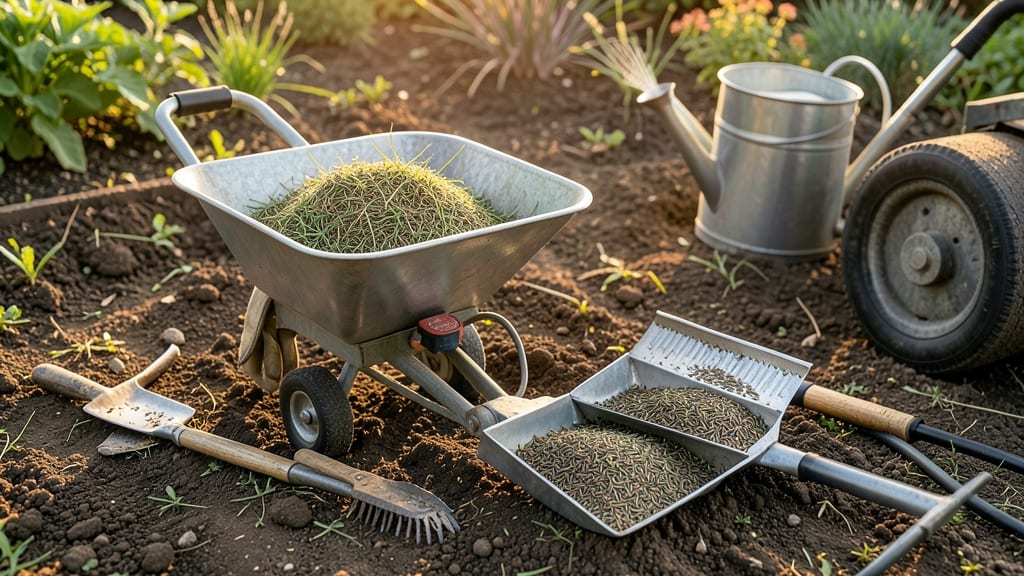
Autumn lawn seed sowing gives you a head start on next year's green carpet—roots grow deeper when temperatures cooperate. ✨ I’ve seen bare spots transform into lush patches by spring when I time it right, and the secret isn’t just cooler weather—it’s how you prep the soil and choose seeds that thrive in fall’s mild conditions.
The ideal window is 4-6 weeks before your first frost, when soil stays warm enough for germination but nights cool down to slow weed competition.
You’ll need a rake, compost, a light layer of starter fertilizer, and seeds rated for your climate zone—cool-season grasses like fescue or ryegrass are my go-tos for reliable results.
After sowing, keep the seedbed moist (not soggy) with daily watering for the first two weeks, then taper to twice weekly once sprouts appear. The roots you build now will outperform spring plantings—drought resistance, weed suppression, and a lawn that stays thick through summer heat.
Works in most climates, though southern regions may prefer late fall sowing. The key is adapting: if your autumns are short, focus on soil prep and choose fast-germinating varieties. Let’s get that seed in the ground before winter sets in!
📚 In This Guide
- What you need
- Instructions
- Tips and common mistakes
- Wrapping up and next steps
What you need
- ● High-quality lawn seed: Choose a mix tailored to your climate (e.g., cool-season grasses like Kentucky Bluegrass or Fescue for most U.S. regions). Aim for 5–10 lbs per 1,000 sq ft, depending on seed type.
- ● Lawn fertilizer: A starter fertilizer (high in phosphorus, e.g., 5-10-10 ratio) to promote root growth. Use 10–20 lbs per 1,000 sq ft.
- ● Topsoil or compost: ¼–½ inch layer to improve seed-to-soil contact and nutrients.
- ● Rake: A bow rake (for leveling) and a garden rake (for seed distribution).
- ○ Lawn roller: A lightweight (50–100 lb) roller to press seed into soil (optional but helpful).
- ● Water source: A hose with a sprinkler head or garden sprayer for gentle watering.
- ● Gloves & knee pads: Protect your hands and knees during prep work.
- ○ Broadcast spreader: For even seed distribution (optional but efficient).
- ● Soil test kit: Check pH (ideal: 6.0–7.0) before planting.
- ○ Weed barrier fabric: (Optional) If your lawn has stubborn weeds, lay down fabric before seeding.
Step-by-Step instructions for sowing lawn seed in autumn
Autumn’s mild temperatures and consistent rainfall create the perfect conditions for a resilient lawn—here’s how to take advantage.
🪴 Step 1: Prepare the Soil for Optimal Germination
Start by removing any existing grass, weeds, or debris from the area using a rake or sod cutter. You want bare soil with no competition for your new seeds. I like to loosen the top 4 inches of soil with a garden fork or tiller—this breaks up compacted layers and lets roots penetrate easily.
After loosening, smooth the surface with a rake, leaving it slightly rough for better seed-to-soil contact. The goal is a fine, crumbly texture that holds moisture without clumping. If your soil tests acidic, add 1 pound of lime per 100 square feet and mix it in—cool-season grasses thrive in a pH of 6.0 to 7.0.
💧 Step 2: Spread Seed Evenly for Uniform Growth
Divide your lawn seed into two equal portions—this trick ensures even coverage. Walk in one direction while scattering the first half, then turn 90 degrees and spread the second half. You’ll see a consistent layer with no thick or thin patches. For a 100-square-foot area, use about 5 pounds of seed (check the packet for exact rates).
Don’t skip this cross-pattern method—I’ve seen homeowners miss spots by spreading in just one direction. Lightly rake the seeds into the soil with a stiff-bristled rake, pressing them ¼ inch deep. Deeper planting delays germination, while leaving seeds exposed risks drying out or being washed away.
☀️ Step 3: Water Gently but Frequently for Germination
Keep the soil consistently moist for the first 14 days—this is critical for seedling success. Water lightly twice daily, using a fine mist setting on your hose or sprinkler. The top ½ inch of soil should stay damp, but not soggy. Overwatering can suffocate seeds, while underwatering causes them to dry out before sprouting.
I set a timer for 10 minutes in the morning and another in the evening to avoid guesswork. Once seedlings reach 2 inches tall, reduce watering to once daily but keep it deep. You’ll know you’re doing it right when new sprouts appear in 7-14 days—they’ll look like tiny, bright green blades.
✂️ Step 4: Maintain and Protect New Growth
After the first mowing at 3 inches tall, set your mower to its highest setting to avoid scalping the young grass. Cool-season grasses like fescue and rye grow best at 2.5 to 3.5 inches, so never cut more than ⅓ of the blade height at once. This encourages deeper roots and a thicker lawn over time.
Apply a light layer of straw mulch (about ¼ inch thick) to protect seeds from drying out and to suppress weeds. Avoid heavy mulch—it can block sunlight and smother seedlings. If birds or squirrels start pecking at the seeds, cover the area with wire mesh temporarily until germination is complete.
Tips & tricks for perfect autumn lawn seed germination
Autumn’s cooler weather gives you a head start on a lush lawn—here’s how to maximize your seeds’ potential.
Soil Prep Secret: In Step 1, don’t just loosen the top 4 inches—test your soil first! A simple pH test kit (available at garden centers) will tell you if you need lime. I’ve seen acidic soil completely stifle germination even with perfect watering. If your soil tests below 6.0, add that 1 pound of lime per 100 square feet right after tilling—it’ll take about 2 weeks to adjust pH before planting.
Seed Spreading Technique: For Step 2, the cross-pattern method works wonders, but here’s a pro move: use a seed spreader if you have one—it’s more precise than hand-scattering. If you’re doing it by hand, walk slowly and keep your arm extended to maintain consistent spacing. I’ve seen people rush this step and end up with clumpy patches that grow unevenly. After spreading, give the seeds a gentle press with your rake—just enough to make contact with the soil, not bury them.
Watering Timing Trick: Those 10-minute sessions in Step 3 are crucial, but timing matters just as much as duration. Water in the early morning (between 6-9 AM) so the soil stays moist through the day. Avoid evening watering—wet leaves overnight can encourage fungal growth. I set my sprinkler timer for 5 minutes in the morning and 5 in the evening, which gives me that consistent moisture without overdoing it. Watch for puddles—they’re a sign you’re overwatering.
Protective Layer Strategy: When applying that ¼-inch straw mulch in Step 4, choose straw over hay—hay contains weed seeds you don’t want! Spread it evenly after seeds have sprouted (around day 10) to prevent erosion and retain moisture. For problem areas with birds, I’ve had success with lightweight chicken wire laid directly over the seeds until germination is complete—it’s temporary but effective.
Pro Tips for Sowing Lawn Seed In Autumn
- Autumn’s cooler weather gives you a head start on a lush lawn—here’s how to maximize your seeds’ potential.
- Soil Prep Secret: In Step 1, don’t just loosen the top 4 inches—test your soil first! A simple pH test kit (available...
- Seed Spreading Technique: For Step 2, the cross-pattern method works wonders, but here’s a pro move: use a seed sprea...
Frequently asked questions
Got questions about autumn lawn seeding? You’re not alone! Here are some of the most common concerns—and straightforward answers—to help you get started with confidence.
Why is autumn the best time to sow lawn seed?
Autumn’s cooler temperatures and frequent (but not overwhelming) rainfall create ideal conditions for seed germination and root development. Unlike summer’s heat or winter’s dormancy, fall gives seeds a head start while minimizing stress on young grass. Plus, weeds are less aggressive, so your new lawn stands a better chance of thriving!
How do I know if my soil is ready for seeding?
Test your soil’s readiness with these quick checks: loosen the top 2-3 inches—it should crumble easily, not clump. If it’s hard or waterlogged, wait for drier conditions. A simple pH test kit (ideal range: 6.0–7.0) ensures nutrients are accessible. Amend with compost if the soil feels sandy or clay-heavy.
Can I overseed an existing lawn in autumn?
Overseeding in autumn is a great way to fill thin patches or boost density. Mow your lawn shorter than usual (1–1.5 inches), rake away debris, and spread seed lightly over bare spots. Water gently twice daily for the first 2 weeks to keep soil moist. Just avoid heavy foot traffic until the new grass is established (about 4–6 weeks).
What if I miss autumn seeding—can I do it in spring?
Spring seeding is possible, but timing is trickier. Sow seeds as early as possible (late winter/early spring) to avoid summer drought stress. Spring seeds also face fiercer competition from weeds, so pre-emergent herbicides (applied before seeding) may help. However, autumn still wins for root growth—spring is a backup, not a replacement!
Why is my new lawn patchy after sowing?
Patchiness often stems from uneven seed distribution, poor soil contact, or inconsistent watering. Double-check your seeding technique: use a spreader for even coverage, lightly rake seeds into soil, and water daily (not just when it rains). Birds or wind might also steal seeds—consider a lightweight straw mulch to protect them until germination. Patience is key; thin spots may fill in as the lawn matures.
Do I need to fertilize before or after sowing?
Start with a light application of starter fertilizer (high in phosphorus) before sowing to encourage root growth. Avoid heavy nitrogen until after germination, as it can burn tender seedlings. Post-seeding, use a balanced fertilizer (like 10-10-10) once the grass reaches 3–4 inches tall. Over-fertilizing now can do more harm than good!
Wrapping up and next steps
Autumn is your secret weapon for a lush, resilient lawn—cooler temps and moisture work magic on new grass roots! By choosing the right seed, prepping soil carefully, and timing your sowing just right, you’ll set your lawn up for all-season success. 🌱
Ready to roll up your sleeves? Grab your tools, pick a crisp day, and get planting—your future green oasis starts now! For extra confidence, check out our lawn care calendar to track progress and next steps.