
Lawn
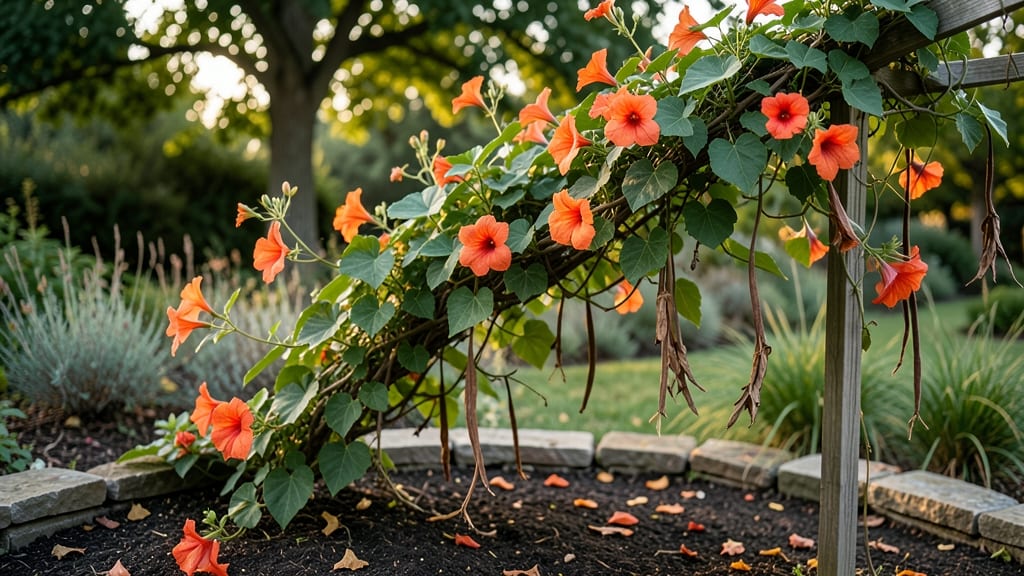
Harvesting trumpet creeper seed pods before they twist open is the secret to saving the best seeds. 🌿 These woody capsules release seeds only when fully mature, but collecting them at the right stage means you control the timing—and avoid losing seeds to squirrels or wind.
The pods turn from green to brown when ready, and a gentle twist is all it takes to open them without damaging the seeds inside.
You’ll need just a few supplies: gloves to protect your hands from the plant’s mild sap, a small bucket for collecting pods, and a dry paper bag for storage.
The key is patience—wait until pods are fully brown but still firm to the touch, usually in late fall after the first frost. Once you’ve gathered them, let the pods dry indoors for a few days before cracking them open to extract the seeds.
Germination takes time, but with a little help, you’ll see those first green shoots within 4-6 weeks. Start by soaking the seeds overnight to soften the hard outer shell, then mix them with damp sand and refrigerate for 30-60 days to mimic winter stratification.
This trick tricks the seeds into thinking they’ve survived the cold, waking them up when spring arrives.
Once they sprout, keep the soil consistently moist but not soggy, and give them bright, indirect light. Trumpet creepers grow fast, but they’re sensitive to transplant shock—so start them indoors or in a protected spot until they’re sturdy enough for the ground.
With the right care, you’ll have vines climbing and blooming within a season or two.
📚 In This Guide
- What you need
- Instructions
- Tips and common mistakes
- Wrapping up and next steps
What you need
- ● Mature trumpet creeper plants (ensure they’re healthy and have fully developed seed pods—typically in late summer or fall).
- ● Pruning shears or sharp scissors (for clean cuts; choose bypass pruners for precision).
- ● Gloves (heavy-duty gardening gloves to protect against thorns and sap).
- ● Large cardboard boxes or paper bags (for collecting seed pods; avoid plastic to prevent moisture buildup).
- ● Newspaper or paper towels (for drying pods indoors).
- ● Twine or rubber bands (to secure bags or bundles of pods).
- ● Labeling tags and a marker (to track varieties or harvest dates).
- ● Ladder or step stool (for reaching higher pods safely).
- ● Small hand trowel (if you’re also collecting fallen pods from the ground).
- ● Desiccant packets (to speed up drying in humid climates).
- ● Seed storage containers (airtight jars or envelopes for long-term storage).
- ● Camera or notebook (to document pod stages or plant progress).
How to harvest trumpet creeper seed pods without the twist
Here's how to collect those vibrant seed pods cleanly—no tangles, no frustration, just smooth harvesting.
🌿 Step 1: Identify Mature Seed Pods
Trumpet creeper pods turn from green to a deep, papery brown when ready—this usually happens in late summer to early fall. Look for pods that feel slightly dry to the touch but haven't split open yet. If you press gently and hear a faint crackling sound, that's your signal they're ready.
I always harvest pods in the morning after the dew has dried but before the sun gets too intense. The cooler air makes the pods easier to handle without sticking to your fingers. Avoid harvesting after rain—the pods become slippery and harder to grip.
✂️ Step 2: Use the Right Tools for Clean Cuts
Never pull or twist pods off the vine—that's how you end up with broken stems and tangled vines. Instead, grab a pair of sharp pruning shears (cleaned with rubbing alcohol first) and cut the pod 1-2 inches above the stem attachment. This leaves a clean stub that won't attract pests.
If you don't have shears, use a small knife or even a pair of scissors, but always cut at a 45-degree angle to prevent water from pooling on the cut surface. I like to wear gloves too—the pods can stain your hands, and the stems have tiny barbs that itch if they snag your skin.
🪴 Step 3: Collect and Dry the Pods Properly
Place the harvested pods in a paper bag (not plastic—it traps moisture) and let them dry in a shady, well-ventilated area for 3-5 days. The goal is to let the pods dry completely so the seeds inside release easily when you open them. Flip the bag daily to ensure even drying.
Don't rush this step. If you try to open pods too soon, the seeds will stick to the inner membrane and be nearly impossible to separate. You'll know they're ready when the pod splits open on its own or when you gently squeeze it and hear seeds rattling inside.
🌱 Step 4: Extract and Store the Seeds
Once the pods are fully dry, lay one on a clean sheet of paper and gently press the sides together. The seeds should spill out cleanly—if they don't, the pod wasn't dry enough. I like to use a small funnel to collect the seeds into a labeled envelope for storage.
Store the seeds in a cool, dry place (like a sealed jar in your pantry) where they'll stay viable for 1-2 years. Label the envelope with the harvest date—older seeds germinate more slowly, so fresh ones give you the best start. If you're unsure about viability, do a quick germination test by planting a few seeds in damp paper towels for a week.
⏰ Step 5: Clean Up and Prevent Future Tangles
After harvesting, give the vine a quick once-over to remove any remaining immature pods or damaged growth. This keeps the plant looking tidy and reduces the chance of pests hiding in leftover debris. I also like to lightly prune any overly long or unruly vines at this time—it encourages bushier growth next season.
Here's the thing—trumpet creeper can get aggressive if left unchecked. If you're not planning to save seeds next year, consider pruning the vine back by one-third after harvesting. This prevents it from taking over your garden and makes next year's pods easier to reach. Just don't cut back too late in the season—the plant needs time to recover before winter.
Tips & tricks for harvesting trumpet creeper seed pods
These little details make all the difference between a smooth harvest and a tangled mess.
Timing is Everything: The morning after dew dries but before the sun peaks is your golden window—pods are cooler, less sticky, and easier to handle. I've learned this the hard way after struggling with slippery pods in the afternoon heat. If you must harvest later, work in the shade to prevent the pods from drying out too quickly on the vine.
Tool Prep Saves Time: Before you even start, clean your pruning shears or knife with rubbing alcohol to prevent spreading plant diseases between cuts. I keep a small spray bottle of water nearby too—it helps loosen stubborn pods and keeps your tools from overheating on hot days. A pair of thick gardening gloves isn't just for protection; they let you handle more pods before your hands get tired.
Drying Strategy: Those 3-5 days of drying might feel long, but rushing it means seeds stuck to the pod walls. I place my paper bags on a wire rack in a breezy spot—this allows air circulation on all sides. If you're short on time, consider using a food dehydrator set to its lowest setting (around 95°F) for 24 hours instead of air drying. Just monitor closely to avoid overheating.
Seed Viability Check: Not all seeds will germinate, even from fresh pods. After storing your seeds for a few months, do a quick test: place 10 seeds between damp paper towels in a sealed bag for 7 days. If fewer than 5 sprout, you might want to harvest fresh pods next season. This simple test saves you from planting dozens of seeds hoping for the best.
Pro Tips for Trumpet Creeper Seed Pods
- These little details make all the difference between a smooth harvest and a tangled mess.
- Timing is Everything: The morning after dew dries but before the sun peaks is your golden window—pods are cooler, les...
- Tool Prep Saves Time: Before you even start, clean your pruning shears or knife with rubbing alcohol to prevent sprea...
Frequently asked questions
about trumpet creeper seed pods—because even the most enthusiastic gardeners have questions! Here are the answers to the most common ones to help you harvest with confidence.When is the best time to harvest trumpet creeper seed pods?
The ideal time to harvest seed pods is in late fall or early winter, once they’ve turned brown and dried on the vine. Wait until they’re crispy to the touch but still intact—this ensures the seeds are fully matured and ready for planting. Harvesting too early can lead to poor germination.
How do I tell if trumpet creeper seed pods are ready to pick?
Look for these signs: dry, papery texture, brown or tan color, and pods that rattle when shaken. Avoid harvesting if they’re still green or soft—this means the seeds aren’t fully developed. A gentle twist should release the pod easily from the vine.
What do I do if my trumpet creeper seed pods won’t open naturally?
If pods are stubborn, place them in a paper bag and store them in a warm, dry place for 1–2 weeks. The warmth and humidity will encourage them to split open on their own. Alternatively, use a small hammer or mallet to gently tap them—just don’t crush the seeds inside!
Can I plant trumpet creeper seeds directly from the pod, or do they need preparation?
Seeds can be planted directly, but a quick stratification trick boosts germination: Mix seeds with damp sand and refrigerate for 2–4 weeks to mimic winter. This mimics natural conditions and helps break dormancy. Plant in well-draining soil after stratification for best results.
What should I avoid when harvesting trumpet creeper seed pods?
Avoid these common mistakes:
- Harvesting in wet weather—moisture can cause rot or mold.
- Storing pods in airtight containers—they need airflow to dry properly.
- Planting seeds too deeply—they need light to germinate, so keep them shallow (¼ inch max).
- Ignoring invasive tendencies—this plant spreads aggressively; harvest and plant with caution!
Wrapping up and next steps
Harvesting trumpet creeper seed pods doesn’t have to be a tangled mess—with the right tools and techniques, you can collect them stress-free! Whether you’re saving seeds for next year’s garden or simply admiring their unique beauty, this guide makes the process simple and enjoyable.
Now that you’re equipped with the knowledge, grab your gloves and get ready to transform those twisty pods into easy-to-handle treasures! 🌿✨
Ready to take the next step? Start by identifying the ripest pods on your vine and follow the steps above. Happy harvesting—and may your garden flourish with vibrant trumpet creepers for years to come!