
Lawn
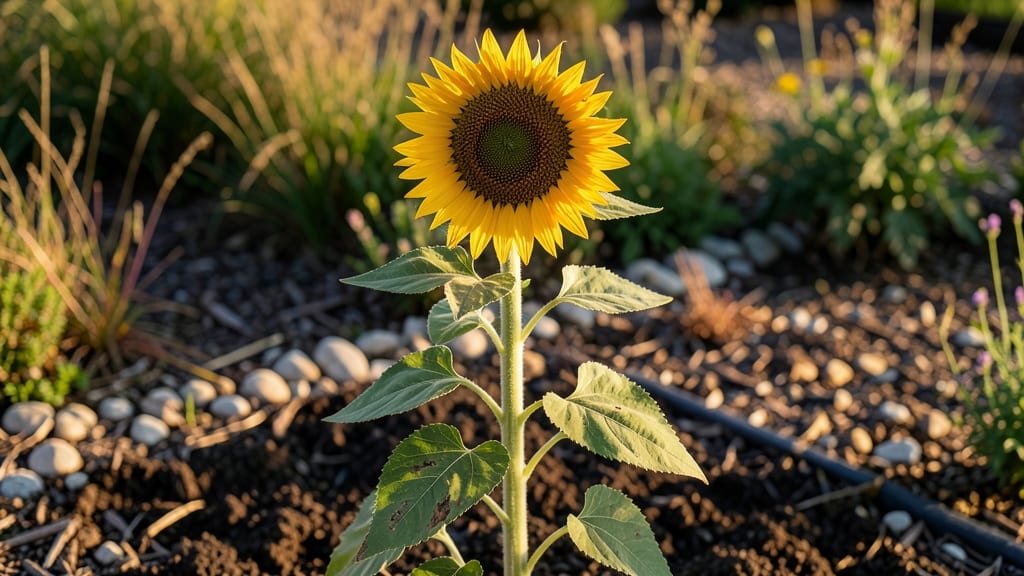
A sunflower seed identification chart helps you avoid planting blindly—whether you want towering giants that steal the view or compact varieties that vanish in the garden bed. 🌻 The right seed chart matches plant height, bloom time, and seed size to your space, whether you’re growing 10-foot cut-flower stalks or container-friendly dwarfs.
Most gardeners fixate on height when they should start with seed type: single-seeded varieties like 'Russian Giant' produce one massive bloom per stem, while double-seeded types like 'Teddy Bear' create fluffy, pollen-free centers perfect for bird feeders.
The seed’s shape and color also hint at growth habits—round, black seeds often mean tall plants, while striped or mottled seeds usually signal shorter, bushier types.
By the time you see those first fuzzy sprouts, you’ll know exactly what to expect: 9-foot stalks with dinner-plate blooms or 2-foot mounds of cheerful yellow faces. The chart breaks down how seed traits translate to real-world garden performance, so you can skip the trial-and-error years.
This isn’t just about picking pretty flowers—it’s about growing sunflowers that actually fit your yard, thrive in your climate, and give you the results you want without surprises. Let’s decode those seed packets together.
📚 In This Guide
- What you need
- Instructions
- Tips and common mistakes
- Wrapping up and next steps
What you need
- ● Sunflower seeds or plants: A mix of Helianthus annuus varieties (e.g., oil-type, confectionery, or birdseed types) for comparison. Aim for at least 5–10 different seed samples or mature plants with distinct heads.
- ● Magnifying glass: A 10x–20x magnification lens to examine fine details like seed coat texture, striations, or hull patterns.
- ● Ruler or caliper: For measuring seed dimensions (accuracy to 0.1 mm helps with precise identification).
- ● White or light-colored tray: A shallow dish (e.g., 12"x18" baking sheet) to spread seeds for easy comparison.
- ● Notebook or digital device: To record observations, sketch seed features, or take photos.
- ● Reference chart or guidebook: A printed or digital sunflower seed identification chart (like the one you’re creating!) or a field guide (e.g., Sunflower Varieties for North America).
- ● Labeling supplies: Small waterproof tags or sticky notes to mark seed varieties during sorting.
- ○ Basic kitchen scale (optional but helpful): A 0.1g precision scale to weigh seeds if comparing mass is part of your analysis.
- ● Digital microscope: For ultra-detailed images of seed surfaces (e.g., 50x–100x zoom).
- ● Seed catalog or database access: Websites like blank">Seed Savers Exchange or blank">CropKing for cross-referencing varieties.
- ● Colored pencils or markers: To highlight key features on your chart (e.g., black for striations, brown for hull color).
- ● Humidity-controlled environment: A desiccant pack or small container with silica gel to preserve seeds if studying them over time.
- ● Camera with macro lens: For high-resolution photos of seed details (e.g., 10MP or higher).
How to identify sunflower varieties by seed characteristics
Mastering sunflower seed identification is easier than you think—just focus on these key visual traits.
🌱 Step 1: Examine Seed Color and Shape
Sunflower seeds vary dramatically by color, and this is your first clue. Black oil-type seeds are typically 10-12mm long, elongated, and have a glossy finish. Striped varieties like 'Mammoth' show white-and-black stripes, while heirloom types often feature solid brown or tan hues with rougher textures. Hold seeds up to natural light—their sheen reveals whether they're hybrid or open-pollinated.
Seed shape also matters. Oil sunflowers have pointed, slightly tapered ends, while confectionery types (for snacking) are more rounded and plump. I always compare unknown seeds to known varieties by placing them side-by-side on a white plate—differences become obvious instantly.
☀️ Step 2: Analyze Seed Stripe Patterns
Striped seeds are the most visually distinctive. Three main stripe patterns exist: single-striped (one white band), double-striped (two alternating bands), and multi-striped (three or more bands). 'Russian Giant' typically shows bold white stripes against black, while 'Autumn Beauty' displays narrow, irregular stripes that fade toward the seed's base.
Use a hand lens (10x magnification) to inspect stripe clarity. Hybrid varieties often have uniform, sharp stripes, while heirlooms may show faded or uneven stripes—a sign of genetic diversity. I keep a small notepad nearby to sketch patterns when identifying new seeds, as memory alone can be unreliable.
🌿 Step 3: Check Seed Size and Weight
Size correlates directly with variety. Oil sunflowers average 0.15-0.25 ounces per seed, while giant confectionery types like 'Russian Mammoth' can reach 0.5 ounces or more. Weigh a sample of 10 seeds—oil types will feel light and hollow when shaken in a container, whereas confectionery seeds have a denser, meatier feel.
Seed diameter matters too. Dwarf varieties (under 3 feet tall) produce seeds under 10mm wide, while tall varieties (6+ feet) yield seeds 12mm or wider. I use a digital caliper for precise measurements, but a standard ruler works in a pinch if you line seeds up carefully.
✂️ Step 4: Evaluate Seed Shell Texture
The seed shell's surface reveals breeding history. Smooth, glossy shells indicate hybrid breeding, while rough or pitted shells suggest heirloom or open-pollinated stock. Run your thumb lightly over the seed—hybrids feel almost silky, whereas heirlooms have a slightly gritty texture.
Crack open a seed to check the hull attachment point. Oil sunflowers have a clean break, while confectionery types often show fibrous strands connecting the hull to the kernel. This difference affects how easily you can shell the seeds by hand—a critical factor if you're growing for snacking.
🪴 Step 5: Compare to Reference Charts
Cross-reference your findings with a sunflower seed identification chart (available from seed companies like Baker Creek or Johnny's Selected Seeds). Note whether your seeds match known varieties or exhibit unique traits. For example, 'Teddy Bear' seeds have uniform brown coloring, while 'Evening Sun' seeds show mottled patterns that no other variety replicates.
Photograph seeds from multiple angles and compare them to digital references. I keep a spreadsheet with columns for color, stripe pattern, size, and texture—this helps track seeds I've collected from wild sunflowers or unknown sources. Over time, you'll develop an intuitive sense of what's standard and what's unusual.
Tips & tricks for perfect sunflower seed identification
Between us, the devil is in the details when it comes to sunflower seed identification. Here's what nobody tells you about making those distinctions with confidence.
Lighting is Everything: Natural daylight is your best friend for accurate identification. I learned this the hard way after ruining three batches of seeds I thought were striped but turned out to be solid brown under proper lighting. Place your seeds on a white surface near a north-facing window—artificial light can distort colors and make stripes appear more pronounced than they actually are. If you're working indoors, use a bright LED desk lamp with a color temperature of 5000K or higher for the most accurate color representation.
Texture Tells a Story: The difference between a smooth, glossy seed and a rough, pitted one often reveals whether you're dealing with a hybrid or heirloom variety. I always run my thumb across a sample of seeds before making any conclusions. Hybrid seeds feel almost silky to the touch, while heirlooms have a slightly gritty texture that's impossible to ignore once you notice it. This tactile difference becomes especially important when you're trying to determine if seeds are suitable for snacking versus oil production.
Size Comparison Shortcut: You don't need fancy equipment to measure seeds accurately. After examining hundreds of varieties, I've found that a standard ruler works perfectly when you line up seeds side-by-side. For quick reference, oil sunflower seeds typically fit about 8-10 per inch, while giant confectionery types like 'Russian Mammoth' will only fit 4-5 seeds in the same space. This visual comparison method works surprisingly well and eliminates the need for digital calipers when you're just starting out.
Photography Documentation: Take photos of your seeds from multiple angles before making any final identifications. The digital images will serve as invaluable references later when you're comparing new samples. I keep a dedicated folder on my computer with labeled subfolders for each variety I've identified. This visual archive becomes particularly useful when you encounter seeds with unusual characteristics—the photos help you track patterns over time and spot subtle differences that might be missed during initial examination.
Pro Tips for Sunflower Seed Identification Chart
- Between us, the devil is in the details when it comes to sunflower seed identification. Here's what nobody tells you ...
- Lighting is Everything: Natural daylight is your best friend for accurate identification. I learned this the hard way...
- Texture Tells a Story: The difference between a smooth, glossy seed and a rough, pitted one often reveals whether you...
Frequently asked questions
Got questions about sunflower seed identification? You’re not alone! Here are some of the most common queries—and their answers—to help you navigate your seed collection with confidence.
How do I tell the difference between edible and bird-friendly sunflower seeds?
Edible sunflower seeds (like Helianthus annuus) have a black-and-white striped shell and a large, nutritious kernel. Bird-friendly seeds (often black oil or striped varieties) are smaller, with thinner shells and less meaty kernels. Always check your seed chart—some hybrids blur the line!
When is the best time to harvest sunflower seeds for identification?
Harvest seeds when the back of the flower head turns yellow and the petals droop (late summer to early fall). If left too long, seeds may scatter or sprout. Cut the head, dry it in a warm, dry place for 1–2 weeks, then rub off the chaff to reveal the seeds for ID.
Can I use a sunflower seed identification chart for wild sunflowers?
Yes! Wild sunflowers (like Helianthus debilis) often have smaller, irregularly shaped seeds and rougher shells. Compare them to your chart, but note that wild varieties may lack the uniform features of cultivated seeds. A magnifying glass helps spot key details.
What if my sunflower seeds don’t match any chart variety?
Hybridization happens! If your seeds don’t fit, note their shell color, size, and kernel shape, then cross-reference with regional wildflower guides. Snap a photo and consult local gardening forums—they’re great for crowd-sourced ID help.
Pro Tip:
Store seeds in airtight containers with a silica packet to prevent mold. Label each variety with the harvest date—this keeps your chart accurate for years!
Wrapping up and next steps
Mastering sunflower seed identification opens up a world of gardening possibilities—whether you're growing for beauty, birds, or snacks! 🌻 With this chart, you’ve got the tools to spot the differences between varieties like Russian Mammoth and Teddy Bear with confidence.
Now that you’re equipped, why not plant a few seeds and see which varieties thrive in your space?
Ready to take the next step? Experiment with different types, track their growth, and maybe even share your findings with fellow gardeners. Happy planting! 🌱