Lawn
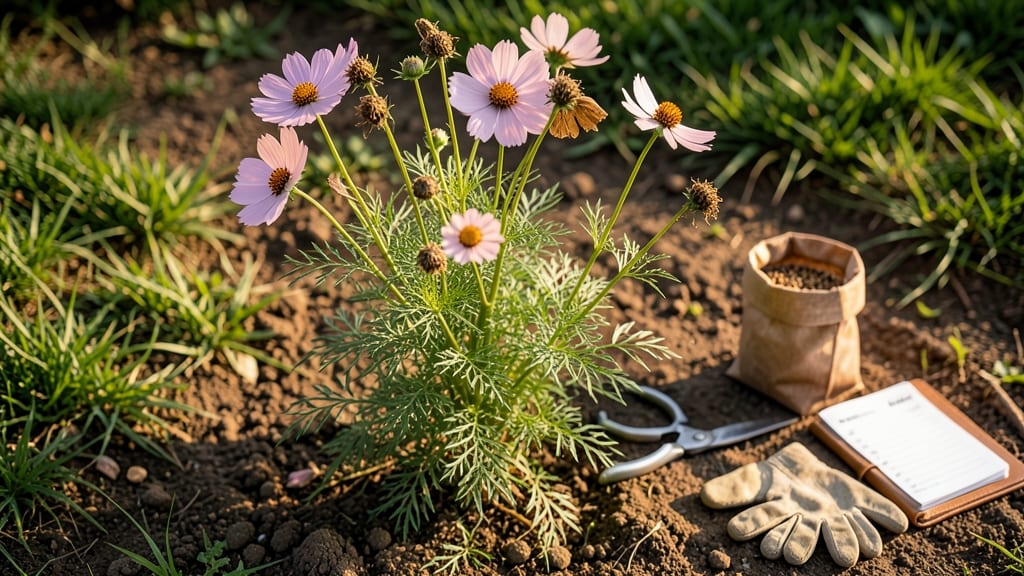
Cosmos seed collection is like harvesting free, fragrant blooms for next year—no store-bought packets needed. 🌻 The secret lies in those papery seed pods that form after flowers fade, packed with tiny black treasures just waiting to be saved. I’ve turned my garden’s late-summer cleanup into a zero-waste ritual by mastering this simple technique, and you can too.
You’ll need just three things: sharp scissors or pruners, a paper bag for drying, and patience—about 2-3 weeks of it. When the seed heads turn from green to dry and papery (they’ll rattle when shaken), that’s your cue.
Cut the stems just above the first set of leaves to encourage new growth while you collect.
Once home, let the pods dry completely in a dark, dry spot—10-14 days—before gently crushing them to release seeds. Store them in an envelope labeled with the variety and date; kept in a cool, dry place, they’ll stay viable for 3-4 years.
Imagine next spring’s garden bursting with the same cheerful faces, all from seeds you nurtured yourself.
This method works for any cosmos variety, whether you’re growing ‘Sensation’ (with its bold colors) or delicate ‘Bright Lights’. The best part? You’ll never buy seeds again—and your garden will thank you with even more vibrant blooms year after year.
📚 In This Guide
- What you need
- Instructions
- Tips and common mistakes
- Wrapping up and next steps
What you need
- ● Cosmos plants: Mature cosmos flowers (varieties like Cosmos bipinnatus or Cosmos sulphureus) with fully dried seed pods (brown and papery). Aim for 5–10 plants for a bountiful harvest.
- ○ Pruning shears or scissors: Sharp, clean pair to snip seed pods. Optional: Small hand pruners for delicate stems.
- ● Paper bags or envelopes: 5–10 brown kraft paper bags (or seed envelopes) to collect pods. Pro tip: Label each bag with the cosmos variety and harvest date! 📝
- ○ Newspaper or cardboard: Large sheet (24"x36") to lay out pods for drying. Optional: Parchment paper for easier cleanup.
- ● Rubber gloves: 1 pair to protect hands from seed pod fibers (they’re not itchy, but they stick!).
- ● Small paintbrush or soft brush: 1–2 for gently dislodging seeds from pods.
- ○ Fine-mesh sieve or strainer: 1 (4–6" diameter) to separate seeds from chaff. Optional: Coffee filter for finer sifting.
- ● Air-tight containers: 2–3 small jars or resealable bags (1 oz–4 oz) with silica gel packets for long-term storage.
- ● Seed catalog or notebook: To track varieties and germination notes.
- ● Desiccant packets: Extra for storage containers to prevent moisture.
- ● Magnifying glass: For inspecting seeds for pests or damage.
- ● Twine or rubber bands: To bundle stems before drying if space is tight.
Step-by-Step guide to harvesting cosmos seeds
Here's how to collect seeds from your cosmos plants without wasting a single pod.
🌱 Step 1: Identify Mature Seed Pods
Wait until the flower heads have completely dried out and turned brown—this usually happens in late summer or early fall, depending on your climate. The seed pods will feel crispy to the touch and open easily when gently squeezed. I know they're ready when I can see the tiny black seeds inside the dry, papery flower heads.
Don't rush this step! Harvesting too early means the seeds won't be fully developed. If you pick them when they're still green or slightly brown, you'll end up with low-quality seeds that won't germinate well. The ideal time is when the entire flower head has turned a uniform brown color and the stems feel brittle.
✂️ Step 2: Cut and Prepare the Flower Heads
Use clean, sharp scissors or pruning shears to cut the dried flower heads from the stems. I like to leave about 1 inch of stem attached—this makes handling the heads easier without losing seeds. Place the cut heads in a paper bag or a cardboard box lined with newspaper to prevent seeds from scattering.
Work on a clean, dry surface to avoid contamination. If you're harvesting in a windy area, consider doing this indoors where seeds won't blow away. The goal is to collect every last seed without losing any to the breeze or dropping them on the ground.
💧 Step 3: Dry and Break Open the Seed Pods
Let the flower heads dry completely for 3-5 days in a warm, dry place away from direct sunlight. This extra drying step ensures the pods are fully brittle and ready to release seeds. Once dry, place the flower heads in a clean bowl or on a flat surface and gently crush them with your hands or a rolling pin.
Be gentle but thorough—you want to break open every pod without crushing the seeds. I like to do this on a large sheet of newspaper so any stray seeds or debris can be easily swept up. If you're particularly patient, you can also use a small sieve to separate seeds from chaff, but this step isn't necessary for most gardeners.
🌿 Step 4: Clean and Store the Seeds
Once the pods are broken open, use a fine-mesh strainer or sifter to remove any remaining plant debris. I find a kitchen strainer with small holes works perfectly for this. Shake the strainer gently to let the seeds fall through while the chaff stays behind. Transfer the clean seeds to a small envelope or airtight container.
Label your container with the cosmos variety and the harvest date—this is especially important if you're saving seeds from multiple types. Store the seeds in a cool, dry place like a pantry or seed drawer. Cosmos seeds can remain viable for 2-3 years if stored properly, so there's no rush to plant them right away.
⏰ Step 5: Test Germination (Optional)
If you want to ensure your seeds are viable, conduct a simple germination test. Moisten a paper towel, place 5-10 seeds on it, and fold the towel in half. Put the towel in a sealed plastic bag and keep it in a warm spot for 5-7 days. Check periodically—if at least half the seeds sprout, they're ready to plant.
This step is especially useful if you're saving seeds from hybrid varieties, as germination rates can vary. Even if your seeds don't pass the test, don't throw them out! Sometimes seeds just need a little extra time or the right conditions to sprout. Plant a few just in case, and you'll likely get some strong seedlings.
Tips & tricks for perfect cosmos seed harvesting
These simple strategies will help you maximize your yield while keeping the process effortless and mess-free.
Timing is Everything: I can't stress enough how critical the drying process is in Step 1. If you're in a humid climate, consider using a small fan on low setting near your drying area for the 3-5 days in Step 3. This helps speed up the process without damaging the delicate pods. The goal is to have them so brittle that they shatter when you touch them—this is your cue they're ready to break open.
Harvesting Hack: For larger cosmos plants, I've found that working in batches makes the process much more manageable. Cut and prepare flower heads in Step 2 in small groups, then move directly to drying them. This prevents seeds from scattering while you're still harvesting other pods. If you're harvesting multiple varieties, use separate containers for each type to avoid cross-contamination.
Cleanup Made Easy: After breaking open the pods in Step 3, I always lay down a large sheet of newspaper or a baking sheet before starting. This makes sweeping up any stray seeds or debris a breeze. You can even use a small hand vacuum with a brush attachment to collect any seeds that might have escaped during the breaking process—this is especially helpful if you're working with large quantities.
Storage Wisdom: When storing your seeds in Step 4, consider adding a small packet of silica gel to your airtight container. This helps absorb any moisture that could compromise seed viability over the 2-3 year storage period. I also like to include a tiny note with my seeds listing the year and variety—this saves me from confusion when I'm ready to plant them next spring.
Pro Tips for Cosmos Seed Collection
- These simple strategies will help you maximize your yield while keeping the process effortless and mess-free.
- Timing is Everything: I can't stress enough how critical the drying process is in Step 1. If you're in a humid climat...
- Harvesting Hack: For larger cosmos plants, I've found that working in batches makes the process much more manageable....
Frequently asked questions
Got questions about collecting cosmos seeds?
You’re not alone! Here are some of the most common queries—and their answers—to make your zero-waste harvest a breeze.
When is the best time to harvest cosmos seeds?
Harvest cosmos seeds when the flower heads turn brown and papery, usually late summer to early fall (after blooming). Wait until the pods are fully dry but haven’t split open—this ensures maximum seed viability. Morning harvests prevent humidity from causing mold.
How do I know if the seeds are mature enough to collect?
Mature cosmos seeds are ready when the flower head crinkles and turns a dull brown, and the pods rattle when shaken. Gently squeeze a pod—if seeds spill out easily, they’re harvest-ready! Avoid collecting seeds from pods that are still green or moist.
Can I collect seeds from cosmos flowers that haven’t fully bloomed?
Nope! Only collect seeds from fully spent flowers (those that have wilted and dried). Immature flowers won’t produce viable seeds, and harvesting too early can stunt future blooms. Patience pays off—wait for the entire flower head to dry completely.
What should I do if my cosmos pods split open before I can collect the seeds?
Don’t worry! If pods split prematurely, scatter the seeds directly onto fresh soil or store them in a paper bag for later planting. You can also cover the plant with a breathable mesh bag to trap seeds before they scatter—this works like a natural “seed catcher”!
Are there eco-friendly alternatives to collecting cosmos seeds?
Yes! If you prefer not to harvest manually, let the seeds self-sow in your garden—they’ll naturally scatter and grow new cosmos plants. Just avoid overcrowding by thinning seedlings. For a zero-waste twist, compost the dried flower heads after seed collection to enrich your soil!
Wrapping up and next steps
Harvesting cosmos seeds doesn’t have to be a chore—it’s a rewarding way to embrace zero-waste gardening while ensuring next year’s blooms are even more vibrant! 🌱 With the right tools and a little patience, you’ll turn dried pods into a treasure trove of seeds, all while reducing waste.
Whether you’re a seasoned gardener or just starting, this method makes seed collection simple and sustainable.
Ready to put your newfound knowledge into action? Start by marking your favorite cosmos plants now—before the pods dry completely—and watch your garden become a self-sustaining seed haven. Happy harvesting! 🌟